
Hydradermabrasion Protocol: A Professional Practice Guide
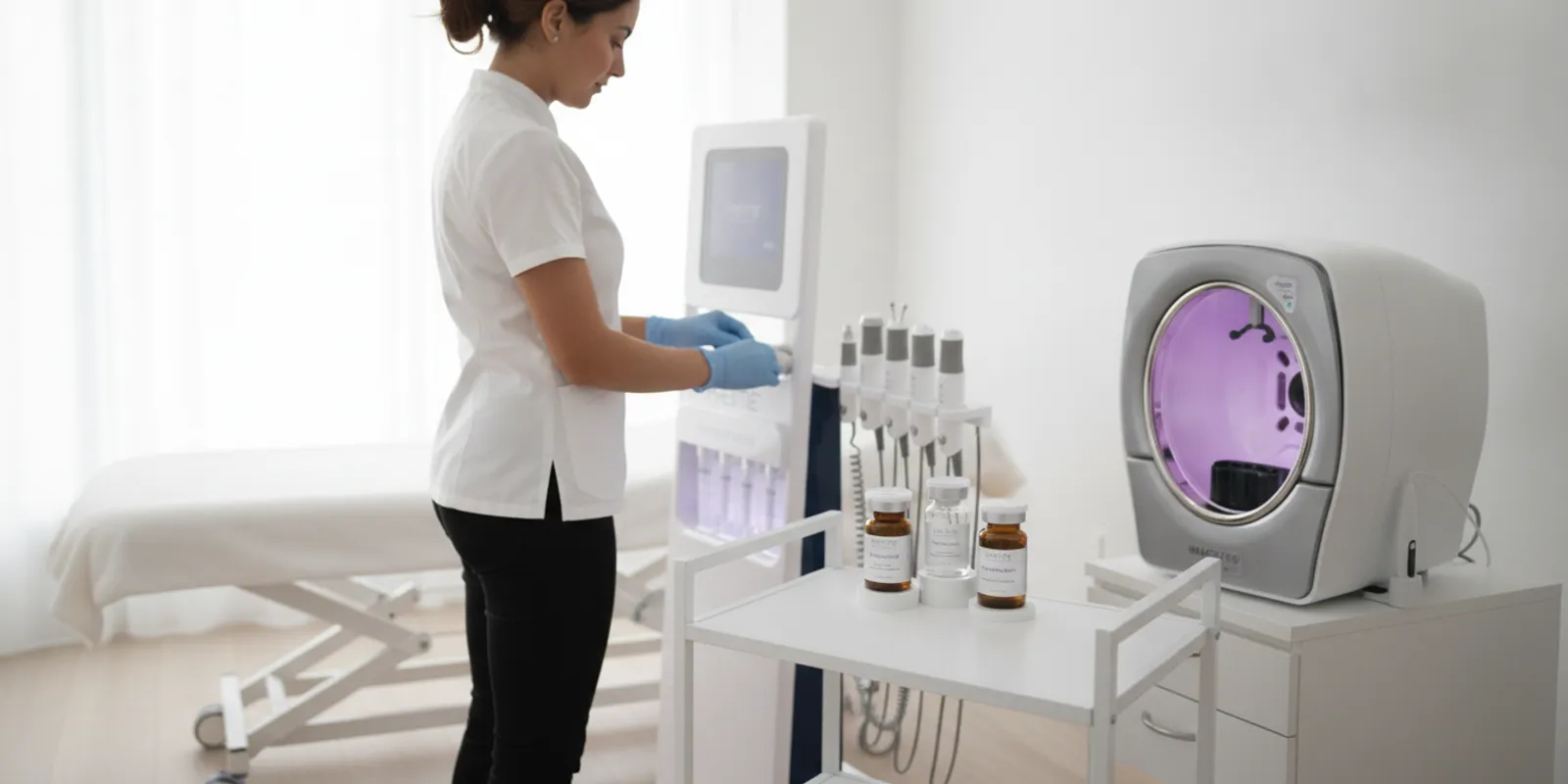
A clear hydradermabrasion protocol helps a practice organize responsibilities, records, communication, and device-specific instructions before offering a service. It should support consistent operations without pretending that one generic guide can prescribe a treatment for every device, client, or jurisdiction. Use this framework to plan the process with the manufacturer’s instructions, qualified supervision, and applicable regulations at the center.
Discuss equipment and practice questions
What should a hydradermabrasion protocol do?
A practice protocol is a controlled document describing how a team prepares for, conducts, records, and reviews a service within its authorized scope. It is not a substitute for the device’s instructions for use, training, a clinician’s judgment, or state and local requirements. Its purpose is to translate those controlling sources into a clear, practice-specific workflow that staff can follow and managers can audit.
That distinction matters because equipment, consumables, settings, intended use, staff credentials, and local rules may differ. A protocol copied from another business or a general article may omit a requirement that applies to your device or location. Start from the materials and rules that govern your own practice, then document how your team will implement them.
Keep the document focused on process and accountability. It should identify who may perform each task, where the current device instructions are kept, what must be checked and recorded, how concerns are escalated, and who reviews updates. Avoid inserting treatment parameters or clinical decisions unless they come from the applicable manufacturer directions and have been approved by the qualified person responsible for practice oversight.
Which sources should govern the protocol?
Build a source file before drafting. Gather the current instructions for the exact device and any applicable attachments, the manufacturer’s training materials, the practice’s policies, and the regulatory and professional requirements that apply to the location and personnel. Record each source’s title, version or date when available, and where staff can find it. If the source changes, a reviewer should be able to identify which parts of the protocol need reassessment.
Use the manufacturer’s instructions as the device-specific reference, rather than relying on a protocol written for another machine or a generic online sequence. If directions are unclear, incomplete, or appear inconsistent with local requirements, pause the drafting decision and ask the appropriate manufacturer representative, clinical supervisor, compliance resource, or regulator for clarification. Do not fill a gap with a guess.
For regulatory context, consult official information from the U.S. Food and Drug Administration and the authorities responsible for your state and locality. A federal agency homepage is a starting point, not a determination that a particular device, service, or staff member is permitted in your setting. Confirm the requirements that apply to your specific circumstances.
Also define document ownership. Name the role responsible for approving the protocol, the role responsible for staff training, and the person or role that checks for updates. A written review schedule can help, but a scheduled date does not replace review when the device instructions, practice policy, staffing, or applicable requirements change.
How can a practice map responsibilities before service?
Begin with a responsibility map, not a treatment sequence. Identify the practice owner or manager, the qualified clinical supervisor where applicable, the staff who may carry out authorized tasks, and the person who maintains supplies and records. Describe boundaries in plain language: who may make a clinical decision, who may explain the practice’s process, and who must be contacted when a question falls outside a team member’s role.
Credential and scope questions should be resolved for the actual jurisdiction and service. Do not assume that a job title, prior experience, or a vendor’s general description settles whether an individual may perform a task. Have the designated practice authority verify applicable requirements, supervision arrangements, and any needed delegations before training staff on the workflow.
A useful responsibility map also covers coverage and handoffs. What happens if the designated supervisor is unavailable? Who reviews a concern that arises during preparation or after the service? Where is the escalation contact recorded? These are practice-governance questions. The answer belongs in the practice’s approved policy and must not be improvised from this guide.
Keep the approved map accessible to the people who need it. Include an owner and review date on the protocol, and use version control so old copies do not remain in circulation. If a team member finds conflicting versions, the protocol should direct them to stop relying on the uncertain copy and confirm the current approved document with its owner.
What belongs in staff training and competency review?
Training should be tied to the specific device, the manufacturer’s required materials, the employee’s authorized role, and the practice’s approved procedures. A sign-in sheet alone does not show that a person understands the workflow. The practice should define what evidence it needs to document, such as completion of assigned instruction, review of the current protocol, and any competency check required by the manufacturer or responsible supervisor.
Use a training record that identifies the staff member, device or process covered, source material and version, date, trainer or reviewer, and any follow-up needed. Make clear which tasks the training covers and which decisions must be escalated. Do not treat completion as authorization to perform work outside a person’s legal scope or the practice’s approved supervision plan.
Plan for onboarding, refreshers, and changes. A new employee may need a different pathway from an experienced staff member who is learning a new device. A new instruction revision or change in practice policy may require targeted retraining. Keep a way for staff to ask questions and document when the team has reviewed an important update.
Before a service is introduced, check that the relevant team members can locate the current instructions, explain the practice’s approved escalation route, and complete the required records. If a knowledge gap appears, address it before the person is assigned the task. This is a training and operations control, not a clinical outcome test.
How should a practice document the workflow?
Design records to capture the information your governing policies and requirements call for, while keeping them concise enough for staff to complete reliably. Depending on the practice’s approved process, records may include the date, responsible staff, relevant device identification, confirmation that required checks were completed, the applicable documentation references, communication provided, and any follow-up or escalation. Confirm the exact fields with the qualified practice authority; this article does not establish a universal record template.
Separate facts from interpretation. Staff documentation should be accurate, timely, legible, and consistent with the practice’s recordkeeping rules. If a form asks for a confirmation, define what constitutes completion and who may make it. Do not use a checkbox to imply that a check was performed if it was not, and do not record a clinical conclusion that the staff member is not authorized to make.
Set expectations for corrections, access, storage, and retention using the rules that apply to your practice. Decide who may review records, how a missing or incomplete entry is brought to attention, and how records are protected. If the practice uses electronic forms, test the workflow before launch and provide a documented alternative for an approved downtime process.
Review a sample of completed records after the protocol is introduced. The goal is to find process gaps: unclear wording, missed fields, inconsistent document versions, or confusion about ownership. Feed those findings into staff education and document revision. A review should not be used to make unsupported claims about service outcomes.
What should teams verify about the device and consumables?
Before developing any device-specific checklist, identify the exact model and the current manufacturer instructions for that unit. The practice’s protocol should point staff to the right source and establish who confirms that it is current. Do not copy device settings, preparation steps, maintenance intervals, or use directions from another model or from a general description of hydradermabrasion.
Consumable requirements must also be verified for the specific equipment and intended workflow. Confirm which items the manufacturer specifies, how they are identified, and what the practice’s approved process requires for receipt, storage, inspection, use, and disposal. Do not assume that a product is compatible because it has a similar name or appears to serve a similar purpose. If compatibility is uncertain, obtain confirmation from the appropriate source before use.
Assign responsibility for inventory and device readiness. The written process can say who checks supplies, where approved items are stored, how stock issues are reported, and who handles equipment service questions. It should refer to the manufacturer’s care and maintenance instructions rather than inventing inspection intervals or repair steps. Staff should know how to report a device concern and where to find the approved next action.
Practices evaluating equipment can review the company’s technology overview and arrange a product discussion to ask device-specific questions. A product conversation can help clarify what documentation and training are available, but it does not replace independent review of the applicable instructions, local rules, or clinical oversight needs.
How should hygiene and room readiness be addressed?
Hygiene procedures must be based on the device instructions, the practice’s infection-prevention policies, and requirements that apply to the setting. Avoid adding a generic cleaning or disinfection sequence to a protocol without confirming that it is appropriate for the particular equipment and surfaces. A seemingly small mismatch in product, contact time, or component handling can make a borrowed checklist unreliable.
Document who is responsible for the room and device readiness checks, which approved policies or instructions they follow, and where any issue is reported. The document can direct staff to verify that the required supplies and materials are available and that the work area meets the practice’s approved conditions. The detailed methods and products should come from the controlling sources, not from an assumed universal routine.
Include a clear stop-and-escalate path. If required supplies are missing, the device appears damaged, instructions cannot be located, or a team member is uncertain whether a readiness requirement has been met, the protocol should explain who decides whether work can proceed. It should not encourage staff to improvise a substitute or bypass a check to keep the schedule moving.
Review this part of the protocol when equipment, products, room arrangements, or relevant policies change. If several devices are used, label the instructions and checklists so staff can distinguish them. Keep any quick-reference sheet consistent with the full approved document and remove superseded copies.
What should client communication cover?
Communication should be clear, accurate, and within the speaker’s role. Before a service, the practice should use its approved process to explain what the service involves, what questions will be reviewed by a qualified professional, and how the client can raise concerns. The protocol should point staff to approved educational and consent materials, rather than asking them to improvise claims about benefits, suitability, risks, or expected results.
Use language that sets realistic expectations and avoids guarantees. Do not promise a particular outcome or imply that the same approach is appropriate for everyone. A client’s individual questions or circumstances should be directed to the qualified person responsible for the relevant assessment. The content and timing of any consent or screening process must follow the practice’s policies and applicable requirements.
Make communication accessible and consistent. Decide who answers routine process questions, how questions requiring clinical judgment are handed off, and how follow-up instructions are provided through approved channels. If staff use a script or handout, assign an owner and review date so it remains aligned with current practice policy and device documentation.
After the service, the practice should use its approved method for documenting communication and handling questions or concerns. The protocol should tell staff where to route a concern and how to reach the responsible supervisor. It should not invent aftercare directions. Any instructions specific to the device or an individual must come from the appropriate manufacturer source or qualified professional.
How can the team compare protocol components?
The table below is a planning aid for assigning ownership. It does not prescribe a treatment procedure. Replace the example roles with the actual roles and requirements for your practice, then have the appropriate authority review the completed protocol.
| Protocol area | Planning question | Evidence to maintain | Review trigger |
|---|---|---|---|
| Source control | Which current device instructions and policies govern? | Source title, version or date, location, and document owner | New or revised source |
| Staff roles | Who may perform each approved task, and who supervises? | Role map, authorization record, and escalation contact | Staffing, scope, or supervision change |
| Training | How is device- and role-specific training confirmed? | Training record and any required competency evidence | New hire, update, or identified knowledge gap |
| Device and supplies | Who verifies the correct equipment and approved consumables? | Practice-approved check record and issue-reporting route | Equipment, supply, or instruction change |
| Hygiene and readiness | Which approved policies and device directions apply? | Assigned responsibility and completed required records | Policy, room, product, or equipment change |
| Communication and records | Who provides approved information and handles concerns? | Current materials, documentation fields, and handoff path | Policy revision or recurring question |
How should a practice launch and maintain the protocol?
Use a controlled launch rather than distributing a draft and assuming it will be followed. First, collect the governing sources and have the designated authority resolve open questions. Next, draft the workflow in plain language, assign owners, and confirm that each step refers to the correct instruction, policy, or record. Then ask representative staff to walk through the document as a usability review without performing a service or treating the draft as an authorization.
During that review, ask whether staff can find the current source, identify their role, locate the escalation contact, and understand what must be documented. Capture unclear terms and missing handoffs. Revise the document, obtain the required approval, train the affected team, and record which version is effective. Make the current version easy to find and take obsolete copies out of routine use.
Before the effective date, use a launch checklist to confirm the foundations are in place: the approved protocol is accessible, referenced instructions match the equipment, assigned staff have completed the required training, records are ready, and escalation contacts are known. The checklist should identify who verifies each item and how unresolved gaps are handled. If a required source is unavailable, a staff member is not prepared, or the approval is incomplete, route the issue to the responsible authority rather than treating the launch date as permission to proceed.
Set a simple method for staff to report an error or suggest a clarification without editing the controlled document themselves. The owner can log the concern, assess whether immediate communication is needed, and coordinate review with the appropriate supervisor. When an update is approved, provide a short change summary so team members understand what changed, which version applies, and whether training or acknowledgment is needed. This keeps document maintenance visible without allowing informal notes or old checklists to become unofficial policy.
After launch, review a small sample of workflow records and invite staff to flag confusing or impractical instructions. Look for repeated questions, missing documentation, supply issues, or uncertainty about responsibility. Address operational findings through the document owner and qualified supervisor. Do not make clinical changes based solely on an administrative review.
For practices building a broader support plan, Emage Medical provides information about marketing and support resources. Buyers can also review customer registration and purchasing requirements and use the company’s hydradermabrasion overview as general background. These resources are starting points for questions, not replacements for the device instructions or practice approval process.
Ask Emage Medical a device question
Frequently asked questions
Can a practice use one standard protocol for every hydradermabrasion device?
No. A practice may use a consistent document structure, but device directions, required materials, intended use, and maintenance instructions can differ. Build device-specific content from the current manufacturer instructions and have the responsible practice authority approve it.
Does this guide provide a treatment sequence?
No. It is a planning framework for governance, training, records, hygiene, and communication. Follow the exact device instructions, qualified supervision, and applicable regulations for any service-specific decisions.
Who should approve a practice protocol?
The appropriate approver depends on the practice, jurisdiction, staff roles, and service. Assign approval to the qualified person or people responsible for clinical oversight and compliance in your setting, and verify any required supervision or authorization before implementation.
How often should the protocol be reviewed?
Set a review schedule that fits the practice’s policies, but also review it when a governing instruction, device, role, supply, policy, or applicable requirement changes. Record the approved version and communicate updates to affected staff.
Make the protocol fit the practice you can support
A reliable hydradermabrasion protocol is specific about ownership and sources while careful not to overreach into unverified directions. Build it around the exact device instructions, qualified supervision, applicable rules, staff training, appropriate records, and clear communication. Have the responsible professionals review the finished document before the practice puts it into use.