
Hydradermabrasion vs Dermaplaning: Comparing Practice Services
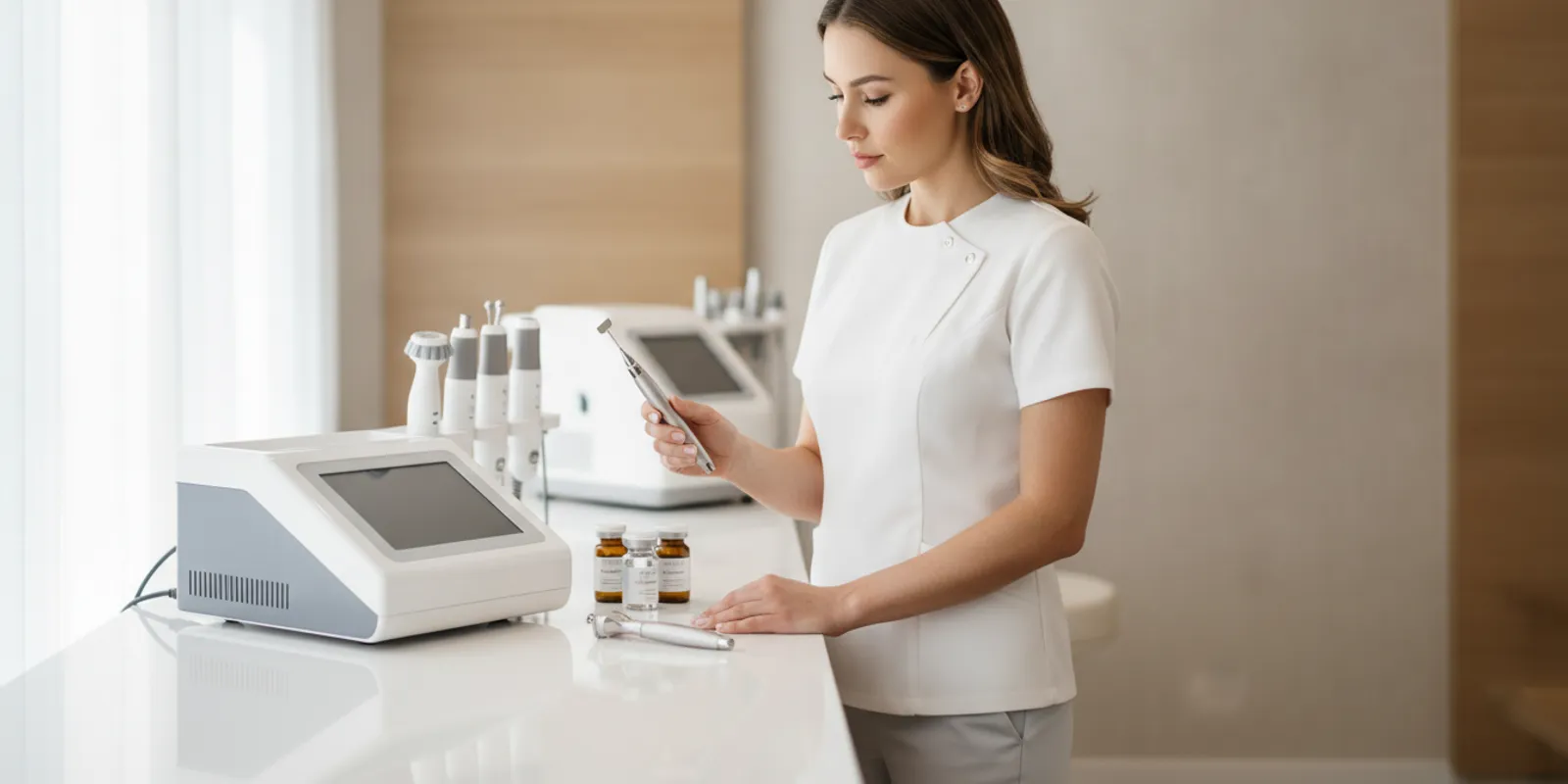
When practices compare hydradermabrasion vs dermaplaning, they are comparing two different service concepts rather than interchangeable versions of one procedure. Hydradermabrasion is equipment-based and commonly involves a device-guided facial workflow with fluid delivery and collection; dermaplaning is a manual exfoliation technique that uses a blade in trained hands. The useful question for a practice is which service model fits its planned menu, provider competencies, room workflow, and operating capacity—not which one is universally better.
Discuss equipment and service planning
What is the practical difference between hydradermabrasion and dermaplaning?
Hydradermabrasion describes a device-assisted service. A system guides a provider through planned steps using its configured handpieces and fluid-based functions. The exact modalities and workflow depend on the particular platform. Dermaplaning is a manual technique in which a qualified provider uses a suitable blade at the skin surface. It does not require a hydradermabrasion platform.
That distinction affects more than the treatment room. A device-led service requires decisions about equipment selection, installation, instructions, maintenance, consumables, and how staff will use the system. A manual service requires a clearly defined instrument workflow, training, competency oversight, and practice-approved procedures for instrument and supply handling. Both require planning; neither should be treated as a shortcut around training or policy.
The category name alone does not specify what a service includes. Device features, protocols, and supplies can vary, while the practice’s own policies shape how a manual technique is delivered. Verify the exact system, planned steps, provider qualifications, and applicable requirements before representing either service on a menu.
How should a practice compare the service concepts?
| Practice consideration | Hydradermabrasion | Dermaplaning |
|---|---|---|
| Core approach | Device-guided workflow using a configured platform | Manual technique using an instrument handled by a trained provider |
| Main planning decision | Select equipment, components, room placement, and operating process | Define provider qualifications, instrument handling, and service process |
| Training focus | Specific device operation, manufacturer instructions, and staff consistency | Technique, instrument handling, and practice-approved procedures |
| Recurring operational review | Maintenance, consumables, service support, and equipment cost | Supplies, disposal or reprocessing policy, and continuing competency |
| Menu-fit question | Will the platform's verified features support the planned service mix? | Does the technique fit provider competencies and the practice's policies? |
| Key verification | Exact model, included components, instructions, and applicable status | Applicable scope, credential, and infection-control requirements |
This is a business-planning framework, not a clinical protocol or legal determination. Requirements may depend on the specific device, service, provider, and jurisdiction. Practices should review applicable rules and manufacturer instructions with the appropriate clinical and compliance leads.
What equipment and workflow questions matter?
For hydradermabrasion, begin with the specific device configuration rather than a broad category description. Ask which functions and handpieces are included, what supplies are used, what operating steps the manufacturer specifies, and what staff must do before and after use. Confirm whether training is provided, who can participate, how new team members are onboarded, and where current instructions will be kept. Ask how ongoing support and maintenance are handled.
Then map the room workflow. Identify where the device will be placed and how staff will prepare the work area, organize supplies, and complete cleanup. Consider access to power and storage as applicable to the chosen system. Note who checks the equipment, who replenishes supplies, and who records maintenance or service questions. This practical map can expose constraints before a purchase or menu launch, when changes are easier to plan.
For dermaplaning, map the manual workflow just as carefully. Establish which providers may perform the service under applicable rules, how practical competency is evaluated, and what instruments and supplies the approved procedure calls for. Clarify the practice’s handling, disposal, or reprocessing policy with its clinical lead. The service may use less equipment than a device-led facial, but this does not remove the need for training, oversight, suitable instruments, or appropriate infection-control procedures.
For both services, document roles rather than relying on informal handoffs. A simple checklist can assign responsibility for room setup, supply checks, communication, cleanup, and escalation of questions. If a staff member is unsure whether an instrument, product, or device step is appropriate, the protocol should identify who can answer before the service proceeds.
A useful way to assess fit is to walk through a normal appointment from preparation to room turnover. Next, consider a disrupted appointment: a missing supply, equipment question, staff absence, or need for additional review. The practice can then see whether the process has a clear owner and whether the planned service is manageable under ordinary operating conditions. This is a workflow exercise, not a claim about treatment time.
How do training and oversight compare?
Training needs differ because the work differs. Device training should cover the operation of the particular platform, its handpieces, its instructions, and the workflow the practice plans to use. Ask whether instruction is hands-on, what materials are available afterward, how questions are handled, and how often the practice should review staff competency. Keep a record of who received training and which system configuration was covered.
Dermaplaning training focuses on the manual technique and instrument handling. Practices should confirm local scope and credential requirements instead of relying on a vendor’s general description or another practice’s policy. A job title alone does not establish what services a person may perform in every state or setting. The practice’s clinical and compliance reviewers should determine how qualifications, supervision, and competency documentation apply.
Oversight should be explicit for either service. Assign an owner for training records, supply procedures, protocol updates, and questions requiring clinical review. For a device, verify the exact model and its instructions rather than drawing conclusions from another device’s status. The U.S. Food and Drug Administration provides general information about medical devices and regulation on its official website; that general resource does not determine a specific practice’s obligations.
Make the review practical for staff. A written procedure should distinguish what the provider is expected to do from what requires a supervisor or clinical lead. It should also show where the current manufacturer instructions and practice policies can be found. This reduces reliance on memory and gives managers a consistent basis for onboarding and periodic review.
What should a buyer include in the cost comparison?
Compare the full operating picture rather than one visible purchase or supply cost. For hydradermabrasion equipment, request an itemized proposal and confirm what is included: the device, handpieces, accessories, initial training, warranty, and support. Ask which supplies are required, how they are replenished, and whether the system specifies products or consumables. Do not assume that all platforms have the same supply model or support terms.
For dermaplaning, list instrument and supply costs, any training or continuing competency expenses, and the operational requirements associated with the practice’s procedures. Include staff time for preparation, service delivery, cleanup, documentation, and supply management. A manual approach may avoid a large equipment purchase, but it still has operating inputs that belong in the comparison.
Use the practice’s own assumptions in a simple worksheet. List one-time setup items separately from recurring expenses. Then identify how many staff members need training, how the service will be scheduled, what room capacity it uses, and what supply usage the approved workflow requires. Keep unknowns marked as questions, not filled with estimates presented as facts. For a broader planning framework, review equipment-planning inputs practices can evaluate and questions to ask when reviewing equipment financing. Confirm any commercial terms directly; a general planning article does not establish the terms of a specific offer.
To make the comparison fair, set the same time horizon and include like-for-like categories. A device quote might include equipment and training but not future supplies; a manual-service estimate might list only the instrument. Bring both sides to the same level of detail before drawing conclusions. If the practice has not verified an item, show it as pending rather than treating it as zero cost.
How can each service fit into a practice menu?
Start with the practice’s current menu, staff capabilities, and the operational gap a new service is meant to address. A device-based facial may suit a practice that wants an equipment-led workflow and has a concrete plan for using the platform. Dermaplaning may suit a practice that has appropriately trained providers and wants to evaluate a manual service. These are service-design considerations, not claims about results or recommendations for an individual.
Consider how the new service would sit alongside existing offerings. Would it require a different room setup, supply storage, staff role, consultation step, or scheduling process? Could the team explain what the service involves without making claims that have not been reviewed? Write a short plain-language description and ask clinical and compliance reviewers to check it before it appears on a website or menu.
For a device-based facial review, Emage Medical’s hydradermabrasion overview introduces the general category. The technology portfolio provides a broader view of the company’s equipment categories. The Préime DermaFacial is a 5-in-1 hydradermabrasion platform with LED phototherapy, microcurrent, ultrasound, and oxygen infusion functions in addition to hydradermabrasion. Review the exact system configuration and its instructions when deciding which features relate to a practice’s proposed workflow. The Préime skincare collections are a separate point of reference for product-line questions; compatibility and protocol decisions should be verified rather than assumed.
A menu plan should also cover communication and support after launch. Decide who responds when staff ask operational questions, who maintains approved descriptions, and where updates are recorded. Emage Medical outlines marketing and support information that buyers can review as part of implementation discussions. Keep the practice’s own responsibilities clear, including clinical approval of protocols and local compliance checks.
What questions help a practice make a fair comparison?
Use a consistent set of questions for both options. Doing so prevents a buyer from comparing a complete device proposal with only the visible instrument cost of a manual service, or comparing a polished product demonstration with an undefined workflow.
- What exact steps and supplies are part of the proposed service, and who approves the protocol?
- Which provider qualifications, training, supervision, and competency records apply?
- What equipment, instruments, handpieces, room features, and supplies are necessary?
- What is included in a device proposal, and which costs or support needs recur?
- Who handles setup, cleaning, maintenance, supply checks, and questions?
- What current instructions and applicable requirements must be reviewed before launch?
- How will the team explain the service accurately and avoid unapproved claims?
- What would cause the practice to delay the launch or revise the workflow?
Ask vendors to answer product-specific questions in writing where possible. Save the model and configuration details, instructions, training information, and service terms in the practice’s review file. For a manual technique, document the sources used to confirm scope and credential requirements, and record who approved the practice procedure. These records make it easier to revisit decisions when staff, equipment, or local rules change.
How can a practice test its decision before launch?
Use a short review sequence instead of deciding from a single demonstration or a broad service description. First, define the role the service should play in the menu and the staff who could support it. Second, collect the exact device or instrument requirements. Third, have the appropriate people assess scope, training, room workflow, supplies, and communication. Fourth, compare one-time and recurring costs using verified inputs. Finally, write down unresolved questions and assign an owner to each one.
For a device under consideration, request a demonstration of the specific system and ask to see its setup, included components, operating instructions, training approach, and support process. Emage Medical provides a product tour request for buyers who want to explore equipment. Practices can also review the customer registration and purchasing requirements before proceeding with an equipment discussion.
For dermaplaning, begin with provider qualifications and training questions, then review instrument and supply procedures with the appropriate clinical lead. For either choice, the practice can conduct a tabletop walkthrough: have each team member describe their role from room preparation through cleanup, then note where instructions or approvals are missing. That exercise can reveal implementation gaps without making assumptions about clinical outcomes.
Contact Emage Medical with equipment questions
Frequently asked questions
Is hydradermabrasion the same as dermaplaning?
No. Hydradermabrasion is a device-assisted service category, while dermaplaning is a manual technique using a blade. The two have different equipment, workflow, and training considerations.
Does dermaplaning require a machine?
Dermaplaning is a manual technique and does not require a hydradermabrasion platform. The practice still needs suitable instruments, trained providers, and procedures that meet applicable requirements.
Does every hydradermabrasion system include the same features?
No. Device configurations vary. Verify the specific model, handpieces, included functions, instructions, and supply requirements instead of assuming a category label guarantees a particular setup.
Which service costs less to add?
There is no reliable universal answer. Compare the full equipment and operating costs for a device option with the instruments, supplies, training, and staff time for a manual service, using verified information and the practice’s own assumptions.
Can any provider offer either service?
Do not assume so. Provider scope and credential requirements can vary by jurisdiction and service, and device-specific requirements may also apply. Practices should verify the relevant requirements with appropriate regulatory and clinical reviewers.
A careful comparison helps a practice choose a service model it can train, support, and explain responsibly. Verify the specific requirements before implementation, and keep the decision grounded in the practice’s actual staff, policies, budget, and workflow.