
ImagePro® Skin Analysis for Practice Consultations
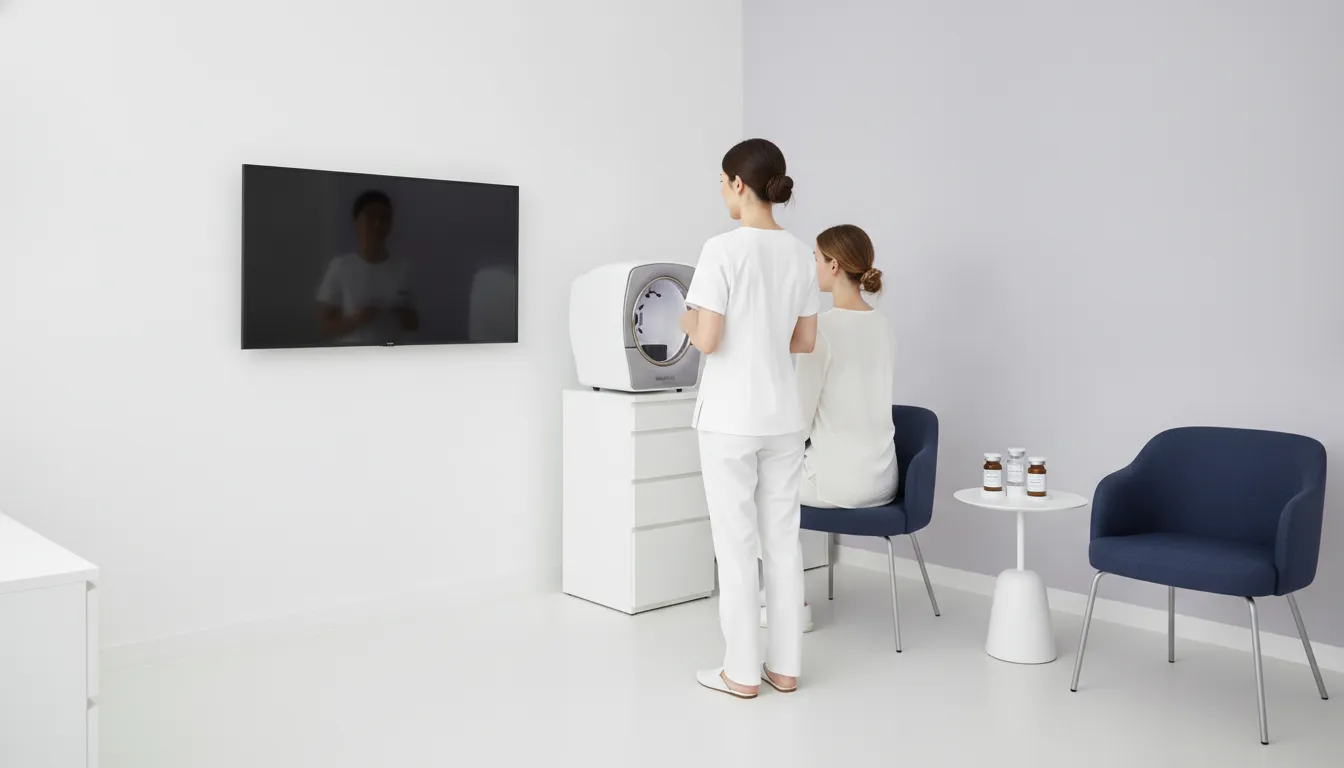
ImagePro skin analysis gives a practice a shared view of the skin before anyone talks about a service. ImagePro systems photograph the skin under different light modes, so the clinician and the client can look at the same concerns and leave with a report. That is a consultation tool. It is not a diagnosis, and it does not decide which treatment a practice should offer.
Call (704) 412-3152 to book an ImagePro product tour. You can also request a product tour online to see a live capture and a sample client report.
Emage Medical, founded in 2001, supplies aesthetic technology to professional practices across the United States. The current ImagePro lineup is SUNLITE, HYBRID, and Halo. Each model captures images and produces a consultation takeaway, but the light modes and the report format are not the same. This guide covers how a team uses those views in the room. For specifications, compare the ImagePro imaging systems.
What ImagePro Skin Analysis Shows in the Room
A consultation often starts with two different descriptions of the same face. The client talks about what they notice in a mirror. The clinician sees texture, tone, and sun-related change that a phone photo can hide. ImagePro skin analysis puts both people in front of the same captured views.
On the live product pages, the line photographs skin under selected light presentations and can include a three-dimensional view. ImagePro SUNLITE pairs 3D imaging with normal, parallel-polarized, cross-polarized, and UV light. ImagePro HYBRID uses full spectral imaging, including normal and cross-polarized presentations, plus 3D technology. ImagePro Halo uses four light modes, a retractable hood, graycard white balancing, and 3D technology.
Those names describe capture, not a clinical finding. A UV view is still a photograph made under UV light. A polarized view is still a photograph made under polarized light. The useful part is that the team can switch views of the same capture and point to what they are discussing.
Emage Medical was named Top Skin Imaging Systems 2026 by MedTech Outlook. The company also has nearly 20 years of experience in skin imaging and aesthetic solutions. That history is context for the line. It is not a promise about a client's result, and it should not be read as one during a consultation.
Say what the screen is before you interpret it. A client who hears "analysis" may think the device has already decided something. A clearer line is that the system captured images under named light modes, and the two of you are looking at those images together. The practice still decides what, if anything, to recommend.
A practical way to introduce the screen is short:
- Explain that the images are views of the same capture under different light.
- Name the view you are showing before you comment on it.
- Ask the client what they see before you name a concern.
- Keep the conversation tied to services the practice actually offers.
Use the Views to Start a Clearer Conversation
The homepage frames the first step of an aesthetic visit as seeing: start with a clearer conversation. ImagePro skin analysis fits that step when the team treats the screen as a shared reference, not as a script.
A retractable hood, used on SUNLITE and Halo, helps control background light during capture. Halo's graycard gives the system a reference for automatic white balancing. Both details matter because a consultation image is only as useful as the conditions in which it was made. On a product tour, ask to see how views are selected and how the team would use them with a client sitting beside the screen.
Keep the language plain. "This is the cross-polarized view of the capture we just made" is clearer than a claim about what the skin "really" is. The client can agree, disagree, or ask a question. That exchange is the consultation. The image supports it.
Three habits keep the review useful:
- Capture under the practice's routine, including hood position and white balance where the model uses them.
- Review one view at a time, and say which view is on the screen.
- Write down only what the team and the client actually discussed.
Practices that already use imaging for hair and scalp work can keep that conversation separate. Hair and scalp analysis has its own tools. Do not fold those findings into a facial ImagePro review.
Room setup is part of the conversation, not a back-office detail. If the hood is meant to limit background light, the person running the capture should close it the same way each time. If the model uses a graycard, white balance should happen before the client is asked to look at color. Inconsistent capture makes the later discussion harder, because the team cannot tell a skin change from a lighting change.
It also helps to decide who talks. One person can run the capture while another walks the client through the views. The script can stay short. Name the view, pause, and let the client respond. A consultation that races through every light mode often teaches less than one that stays on the two views the practice uses most.
Reports and Printed Lists Leave with the Client
A good consultation does not end on the monitor. The current ImagePro pages describe two kinds of takeaway, and they are not interchangeable.
SUNLITE produces a customizable printed shopping list of the skincare solutions and services the practice chooses to discuss. HYBRID adds QR-code report access so the client can reopen the report on a smartphone, plus a printed list of recommendations. Halo also offers QR-code access, and its sharing options include phone or email, along with a customizable printed shopping list.
The report is the record of the imaging conversation. The printed list is the practice's own recommendations. A team should be able to say which document is which before the client leaves. On a tour, ask to see both outputs and how each one is prepared.
Decide the handoff before the first client sits down. Some practices print the list while the client is still in the chair, then point to one or two items they just discussed. Others send the report and keep the printed list for the front desk. Either path can work. What does not work is handing over a page the team has not read.
Train the front desk on the same words the consultation uses. If the report is a QR code, the person at checkout should know how the client opens it. If the list is a shopping list, checkout should know that it reflects the practice's menu, not an automatic order. Mixed messages after a clear consult undo the visit.
| Model | What the client can revisit | What the practice controls |
|---|---|---|
| ImagePro SUNLITE | The views reviewed in the room. Those views include four light modes and 3D imaging. | A customizable printed list. The list names solutions and services. |
| ImagePro HYBRID | A QR-code report. The client can open it on a smartphone. | A printed list. It names the solutions the practice suggests. |
| ImagePro Halo | QR-code, phone, or email access to the report | A customizable printed shopping list of recommendations |
This table is a workflow summary, not a buying comparison. Light modes, hoods, and capture controls belong on the model pages. SUNLITE's list price on its product page is $18,990, with rental listed at $650. HYBRID is listed at $23,990, with rental at $750. Halo is listed at $12,990, with rental at $550. BoxedUp shows current availability and terms. Confirm those figures before you quote them.
Document the Visit without Overstating the Image
ImagePro skin analysis can support the practice's record when the note matches what the system actually produced. A careful note says which model was used, which views were reviewed, and what the client was given to take home. It does not turn a light-mode photograph into a measurement the device does not claim.
The U.S. Food and Drug Administration says aesthetic devices may be regulated depending on intended use, and that results vary. Its guidance is to discuss benefits and risks with a qualified provider. Read that note here: aesthetic devices from the FDA. An ImagePro view can inform a conversation. It does not replace clinical judgment, and it is not a diagnosis.
A documentation habit that stays inside those limits:
- Record the ImagePro model and the date of the capture.
- Name the views that were reviewed, such as normal, cross-polarized, or UV, only when that model offers them.
- Note whether the client received a printed list, a QR report, or both.
- Separate the image review from any service the practice later recommends.
- Store the report the way the practice stores other consultation records.
If a later visit needs a comparison over time, say that plainly and only where the system supports it. Do not imply that every ImagePro model stores or compares images the same way. Ask Emage which output your selected model keeps.
A short chart in the practice's own record is enough. Date, model, views reviewed, and what the client took home will answer most later questions. Avoid pasted marketing lines in the chart. "UV view reviewed" is a fact. "Hidden damage revealed" is a claim the page does not make.
Privacy sits next to documentation. A report that can be opened by QR code, phone, or email should be sent only to the contact the client confirmed. The printed list should not be left in a shared area. These are ordinary practice rules, and the imaging step should follow them.
How ImagePro Skin Analysis Supports a Treatment Discussion
The printed list is only as honest as the menu behind it. SUNLITE's page says the printed shopping list brings together the skincare solutions and services the practice chooses to discuss. HYBRID's printed recommendations are a list of solutions the practice suggests. That is the boundary. The imaging system does not choose the treatment. The practice does.
Emage Medical's portfolio gives a team several places that conversation can go, and they should stay distinct. Skin imaging is the consultation view. Microneedling, including CytoPen NG and CytoPen S2, is a separate device category. The Préime DermaFacial is a hydradermabrasion platform, and Emage Medical is the exclusive U.S. distributor of the Préime DermaFacial system. Préime DermaCeuticals and Préime Derma Professional are professional skincare lines, not imaging products.
Use the report to explain why a service is being discussed. Do not use it to promise what that service will do. If the client asks whether a view "proves" they need a treatment, the accurate answer is no. The view shows what you looked at together. The recommendation comes from the practice's own judgment and from services it is qualified to offer.
Product guidance, education, and ongoing support are part of how Emage works with a practice after the device is chosen. The marketing and support page is where that conversation continues. Training questions belong there, not in the client's printed list.
Build the printed list from services the team can explain that week. If a category is paused, take it off the list. If a product needs a separate consult, say so in the room instead of letting the printout imply it is booked. Clients remember the page they carry more than the aside they heard.
Keep imaging language out of unrelated services. A microneedling visit and a hydradermabrasion visit can refer back to the views you reviewed. They should not copy ImagePro wording onto a consent form or a result claim. The image started the talk. The service has its own instructions.
Questions about ImagePro Skin Analysis before You Compare Models
Practices researching ImagePro skin analysis usually need the workflow first and the model choice second. Before you compare hardware, decide how the consultation should feel.
Ask these questions on a product tour:
- Which light views will the team actually show a client?
- Does the client leave with a printed list, a phone report, or both?
- Who prepares the recommendation list, and from which services?
- How will the practice file the capture with the rest of the visit?
- What training is available for the people who will run the consultation?
SUNLITE is the clearest match when the priority is four light modes and a printed list. HYBRID is the clearest match when the priority is spectral views plus a QR report the client can reopen. Halo is the clearest match when the team wants capture controls, including graycard white balancing, and a report that can be shared by QR code, phone, or email. Those are workflow differences. They are not a ranking.
The category page already compares capture and consultation output side by side. Use this article to decide which takeaway your consultation needs, then use that page to check the model. For pricing and availability, contact Emage. Leasing and financing terms are built around the practice's needs for eligible equipment, and the monthly figure is qualification-based. Emage is not financing purchases in-house. Confirm the current terms for the device you are considering, and do not assume a payment amount.
A useful tour request names the consultation, not just the brand. Tell Emage whether you need a printed list, a report the client can reopen, or both. Ask to watch one capture from hood or white balance through the handoff. That single walkthrough will show more than a feature grid.
After the tour, write down what your team would change in the current consult. If the answer is "we would finally look at the same image," ImagePro skin analysis is doing the job this guide describes. If the answer is "we need a ranked winner," go back to the model pages and compare them there, not in the client's chart.
Compare ImagePro imaging systems when you are ready to look at SUNLITE, HYBRID, and Halo side by side.
Frequently Asked Questions
What is ImagePro skin analysis?
ImagePro skin analysis is the consultation use of Emage Medical's ImagePro imaging systems. The systems photograph skin under different light modes so a clinician and a client can review the same views and leave with a report or a printed recommendation list.
Does an ImagePro image diagnose a skin condition?
No. The live product pages describe light presentations, 3D views, and consultation output. They do not describe the images as a diagnosis. A provider still has to apply clinical judgment.
What does the client take home?
It depends on the model. SUNLITE uses a customizable printed list. HYBRID adds QR-code access to the report. Halo can share the report by QR code, phone, or email, and it also prints a shopping list. Ask to see the exact output on a tour.
Which ImagePro model should a practice buy first?
Start with the consultation you want to run, not with a feature list. Then compare SUNLITE, HYBRID, and Halo on the ImagePro imaging systems page, and confirm price and availability with Emage before you decide.
Call (704) 412-3152 to book your ImagePro product tour. Emage can walk through a live capture, the report, and the printed list for the model you are considering. You can also use the tour form if you would rather have the team follow up.