
Microneedling vs Dermaplaning: A Practice Planning Guide
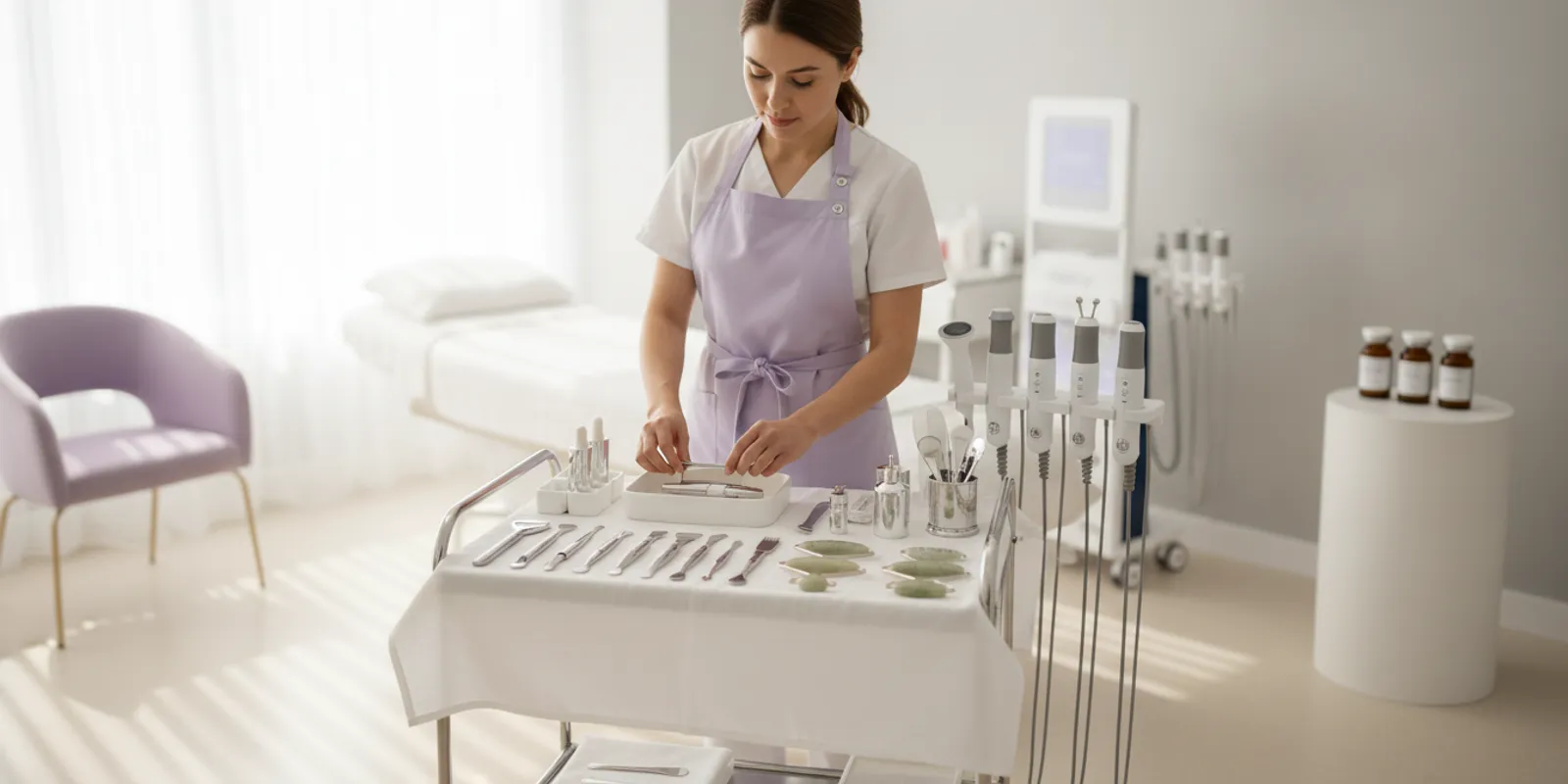
For practices weighing microneedling vs dermaplaning, the decision is not simply which treatment sounds more appealing. Each service uses a different technique and requires its own equipment planning, staff preparation, consultation process, and operating workflow. A side-by-side review can help a practice decide what it is equipped to offer and how to describe each option accurately, without promising a particular result.
Discuss professional equipment needs
What is the practical difference between microneedling and dermaplaning?
Microneedling uses a device with fine needles to create controlled punctures in the skin. Dermaplaning uses a blade to exfoliate the skin surface and remove fine vellus hair. The procedures therefore differ in instruments, technique, the level of device involvement, and the training and protocols a practice must consider. They should not be treated as interchangeable names for the same service.
Those broad descriptions are useful for planning, but they do not define a universal protocol. Devices, instruments, practitioner scope, applicable rules, and practice policies can vary. Before adding either service, confirm that the people who will perform it are qualified under the requirements that apply to the practice’s location and setting. Emage Medical’s customer registration and purchasing requirements describe its professional purchasing process; they do not replace a local scope-of-practice review.
Keep the comparison focused on the practice decision. This article is not a treatment protocol or individual suitability assessment. Providers should use current instructions and appropriate clinical judgment for the exact equipment and service they offer.
How do the services compare for a practice?
| Planning factor | Microneedling | Dermaplaning |
|---|---|---|
| Core technique | Device-based procedure using fine needles to make controlled punctures. | Manual exfoliation using a blade at the skin surface. |
| Equipment planning | Professional device, compatible consumables, instructions, and maintenance procedures. | Suitable blades, safe handling, storage, and disposal procedures. |
| Staff preparation | Device-specific training, protocol review, and competency checks. | Technique training, blade-handling skills, and consistent preparation. |
| Workflow emphasis | Consultation, preparation, device setup, service, documentation, and aftercare communication. | Consultation, skin preparation, controlled technique, documentation, and post-service guidance. |
| Operating questions | Can the practice support device investment, training, maintenance, and oversight? | Can the practice support safe blade use, suitable staff qualifications, and repeatable technique? |
| Readiness evidence | Current device instructions, trained staff, supply plan, and an approved workflow. | Clear blade supply and disposal arrangements, trained staff, and a documented workflow. |
This is a planning comparison, not clinical guidance. Practices should obtain device instructions, product labeling, and training applicable to the exact tools they use. Similar service names do not establish that techniques, qualifications, or requirements are identical.
What should a practice assess before offering either service?
Confirm scope and oversight before buying
Start by identifying who may perform each procedure in your jurisdiction and whether supervision or other oversight is required. Record where the answer came from, who reviewed it, and when it should be revisited. Recheck if the practice changes its location, staffing model, equipment, or service description. Do not rely on another practice’s policy as proof that the same approach applies to your setting.
Device oversight information can help frame the questions to ask, but it does not decide who may perform a procedure locally. The FDA’s medical-device resources are a starting point for reviewing device information and oversight. Consult the current materials that apply to the exact device, and separately verify local professional scope and supervision rules with the appropriate source.
Build a screening and referral process
Create a consistent consultation process that gathers relevant history and identifies when a qualified provider should defer, seek clinical review, or refer. Decide who makes those decisions and how they are recorded. Keep the process grounded in the service’s applicable instructions and the practice’s clinical governance rather than generalized marketing copy. Define which questions booking staff may answer and which must be escalated.
For example, a booking call should not become an informal suitability decision. Staff can describe the service category and explain that an evaluation is needed, while recording the caller’s question for the designated provider. At consultation, the provider can review relevant circumstances, expectations, and instructions for the particular tool before deciding how to proceed. A written escalation path helps staff respond consistently when a question falls outside their role.
Practices can also use a structured checklist to avoid turning the consultation into a rushed yes-or-no exchange. Include a place for the provider to record information reviewed, questions needing follow-up, the decision made, and any explanation given. Keep the checklist specific enough to support consistent documentation, but do not let a generic form replace professional judgment. Emage’s professional screening guide for microneedling offers a related resource for considering how screening fits into practice workflow.
Plan training around the actual tool
Training should address the specific device or instrument, preparation, technique, hygiene, maintenance or disposal, documentation, and handling questions or concerns. A product tour can help a buyer understand equipment features, but it is not a substitute for clinical training or competency validation. Practices evaluating professional microneedling equipment can review Emage Medical’s technology portfolio and ask which information applies to their intended workflow.
Translate training into observable readiness rather than relying on attendance alone. For each team member, record which tool and workflow they were trained on, who confirmed competency, and what questions remain unresolved. If a team member changes from one device or blade system to another, review whether the previous training still covers the new equipment. A short refresher can also help when a service is performed infrequently and staff need to review setup or documentation steps.
Write a repeatable service workflow
Map each service from booking through follow-up. Decide who verifies that the consultation is complete, who prepares the room, what supplies must be available, how the team documents the visit, and where questions are escalated. A written checklist reduces reliance on memory and makes onboarding easier.
- Define consultation and approval steps, including who can authorize proceeding or deferring.
- List required equipment, supplies, room setup, and a person responsible for checking readiness.
- Specify cleaning, maintenance, safe handling, and disposal responsibilities for the tools in use.
- Use approved, plain-language service explanations and aftercare materials.
- Set a process for documenting concerns and arranging provider follow-up.
- Identify what happens if equipment, supplies, or an appropriately trained staff member is unavailable.
How should practices compare equipment and operating requirements?
Equipment is only one part of the service. For device-based microneedling, compare the device’s documented features, instructions, training access, warranty, consumable requirements, maintenance needs, and compatibility with approved protocols. Ask for current product documentation and confirm regulatory wording against the exact product materials. A general device category is not enough to establish the details of a particular model.
Dermaplaning may have a different capital requirement, but a shorter equipment list does not remove the need for training, safe handling, and protocols. In either case, estimate the full operating burden rather than comparing purchase price alone. Include staff time, training, supplies, room turnover, documentation, and applicable oversight. Emage’s marketing and support resources can be reviewed as part of a broader practice discussion; confirm which resources apply to the specific product and arrangement.
Use a side-by-side worksheet before committing. Separate one-time costs from recurring requirements. For a device, enter the purchase quote, compatible consumables, service and maintenance expectations, and staff training time. For a blade-based service, list blade procurement, safe storage and disposal arrangements, replacement timing according to the applicable instructions, and the time needed to maintain technique consistency. Add shared requirements such as room preparation, scheduling, consent documentation, and follow-up administration. Compare like with like: a device quote alone is not equivalent to the full cost of launching a service.
Then assign an owner and a source to each line. “Supplies” is too vague to manage; list which supplies are needed, who checks inventory, and how the practice will respond to a delay. Mark estimates separately from confirmed terms. Emage’s microneedling equipment buying guide may help structure questions during a device purchase discussion. Review current terms directly rather than assuming any financing or payment option.
How can a practice model capacity before launch?
Map a hypothetical service day before opening the schedule. Count realistic appointment slots after including consultation, preparation, room reset, documentation, and follow-up tasks. Do not calculate capacity from hands-on procedure time alone. A service that appears to fit between existing bookings may need additional room turnover or provider availability.
Use the same assumptions for both services, then identify where they diverge. For example, a practice could draw two sample schedules: one in which device setup, instructions, and documentation are included, and another in which blade preparation, safe handling, and disposal steps are explicit. The purpose is not to assume which one takes longer. It is to uncover what the team has not yet timed or assigned. Run a small internal workflow rehearsal without clients and record where staff wait, search for supplies, or ask who owns a step.
Model a conservative day and a disruption day. In the conservative version, assume fewer appointments and more time for questions or room reset. In the disruption version, ask what happens if a trained team member is away, a supply is unavailable, or a provider needs to review a consultation before service. If the workflow fails under an ordinary disruption, resolve the gap before promoting appointments.
Consider a simple capacity worksheet with columns for task, role, estimated time, room or equipment needed, and backup plan. If “provider review” has no assigned role or the room is booked continuously with no reset buffer, that is an operational issue to resolve before launch. The worksheet also makes it easier to compare two potential services without assuming the client-facing appointment time tells the whole story.
How can the services fit into a practice’s business plan?
Service selection should follow the practice’s capabilities and its own demand assessment, not a general claim that one procedure is always better. Consider your current service mix, staff qualifications, room schedule, supply chain, training time, and the types of consultations the team already handles. If the practice is adding a service category, define how it will be introduced, who will explain it, and which questions require a provider-led evaluation.
Estimate resources under conservative assumptions. Include equipment or instrument costs, consumables, staff preparation, ongoing training, and administrative time. Then model appointment slots without displacing existing services. Treat any projected appointment count or revenue as a planning assumption, not a guaranteed outcome. If the practice cannot explain the assumptions behind its forecast, gather that information before treating the forecast as a buying justification.
Some practices may choose one service first, while others may explore both if they can support separate protocols and appropriate staffing. Keep service descriptions distinct. Clients should not be led to believe the services are interchangeable merely because both may be discussed in the context of exfoliation or skin care. A decision matrix can help: score each service against scope readiness, trained staff, full operating costs, supply reliability, schedule fit, and the practice’s stated goals. Record the reason behind each score instead of letting a single strong category obscure a readiness gap.
A staged launch can reduce implementation complexity. First, complete scope and policy review. Next, train intended staff and verify competency. Then rehearse the workflow, checking room setup, record templates, supply availability, and escalation steps. Finally, review the client-facing explanation and decide how to introduce the service. This sequence makes it easier to catch operational gaps before they affect a scheduled visit. Practices considering a broader device purchase can also read this professional microneedling overview for additional context on equipment and workflow questions.
How should staff communicate differences and expectations?
Use neutral, accurate language. Explain the general technique and what a consultation will cover, then direct individual suitability questions to the appropriately qualified provider. Avoid statements that guarantee results, imply every person is suitable, or suggest one procedure is universally safer or more effective. Marketing language should not substitute for the service’s actual instructions or the provider’s evaluation.
Before publishing service pages or handouts, check that wording matches the exact equipment and protocol in use. Review claims about outcomes, risks, downtime, and regulatory status against approved source material. Make sure booking staff know how to distinguish a general explanation from advice about a person’s circumstances. A brief script can make this boundary clear: “These services use different techniques and tools. We can explain the general process, but a qualified provider needs to review your circumstances and determine whether either option is appropriate.”
It also helps to prepare a comparison sheet for staff, not as a sales ranking but as a conversation aid. Include each service’s general technique, what the consultation can clarify, and where questions should be directed. Avoid filling the sheet with unsupported claims or guesses about results. For device details, direct the team to current documentation rather than asking them to repeat information from memory. For broader practice planning, Emage’s article on microneedling service pricing considerations can help frame operational questions without assuming that a particular price or business model fits every practice.
What mistakes can complicate a service launch?
- Choosing based on trend alone. Assess practice demand and operational capacity before selecting equipment or training.
- Skipping jurisdiction-specific review. Confirm scope, supervision, and applicable requirements before scheduling clients.
- Using generic instruction as tool-specific training. Validate competence for the exact instrument and workflow.
- Overlooking recurring needs. Account for supplies, maintenance, documentation, safe handling, and staff time.
- Promising a particular result. Keep public explanations realistic and grounded in approved source material.
- Combining distinct services into one workflow. Establish clear, separate steps and records where appropriate.
- Comparing purchase prices without capacity planning. Include training, room turnover, and administrative time.
- Promoting before internal readiness. Confirm supplies, policies, and escalation ownership before taking bookings.
- Failing to plan for staff absence. Decide how to pause, reschedule, or route a booking when trained coverage is unavailable.
Frequently asked questions
Is microneedling the same as dermaplaning?
No. Microneedling uses a device-based technique with fine needles, while dermaplaning uses a blade for surface exfoliation. Their tools, staff preparation, and operating workflows differ.
Which service requires more equipment planning?
Microneedling typically calls for planning around a professional device, its instructions, consumables, maintenance, and device-specific training. Dermaplaning calls for suitable blades, safe handling and disposal, and technique training. The exact requirements depend on the tools and practice setting.
Can a practice offer both services?
A practice can assess both if its scope, staffing, training, protocols, and facilities support them. Confirm applicable rules and create distinct workflows rather than assuming that one service’s requirements transfer to the other.
How can a practice decide where to start?
Compare demand, staff qualifications, operating costs, training needs, supply planning, and implementation time. Ask qualified providers to review individual suitability questions and avoid basing the decision on unverified outcome promises.
Does general device information determine who may perform a procedure?
No. Device oversight resources do not replace jurisdiction-specific scope-of-practice review, professional judgment, or the instructions and policies that apply to a particular service.
When comparing microneedling and dermaplaning, begin with technique, oversight, and day-to-day requirements. A deliberate assessment helps the practice build distinct workflows, plan realistically, and communicate clearly with clients.