
What Is Microneedling? A Professional Practice Guide
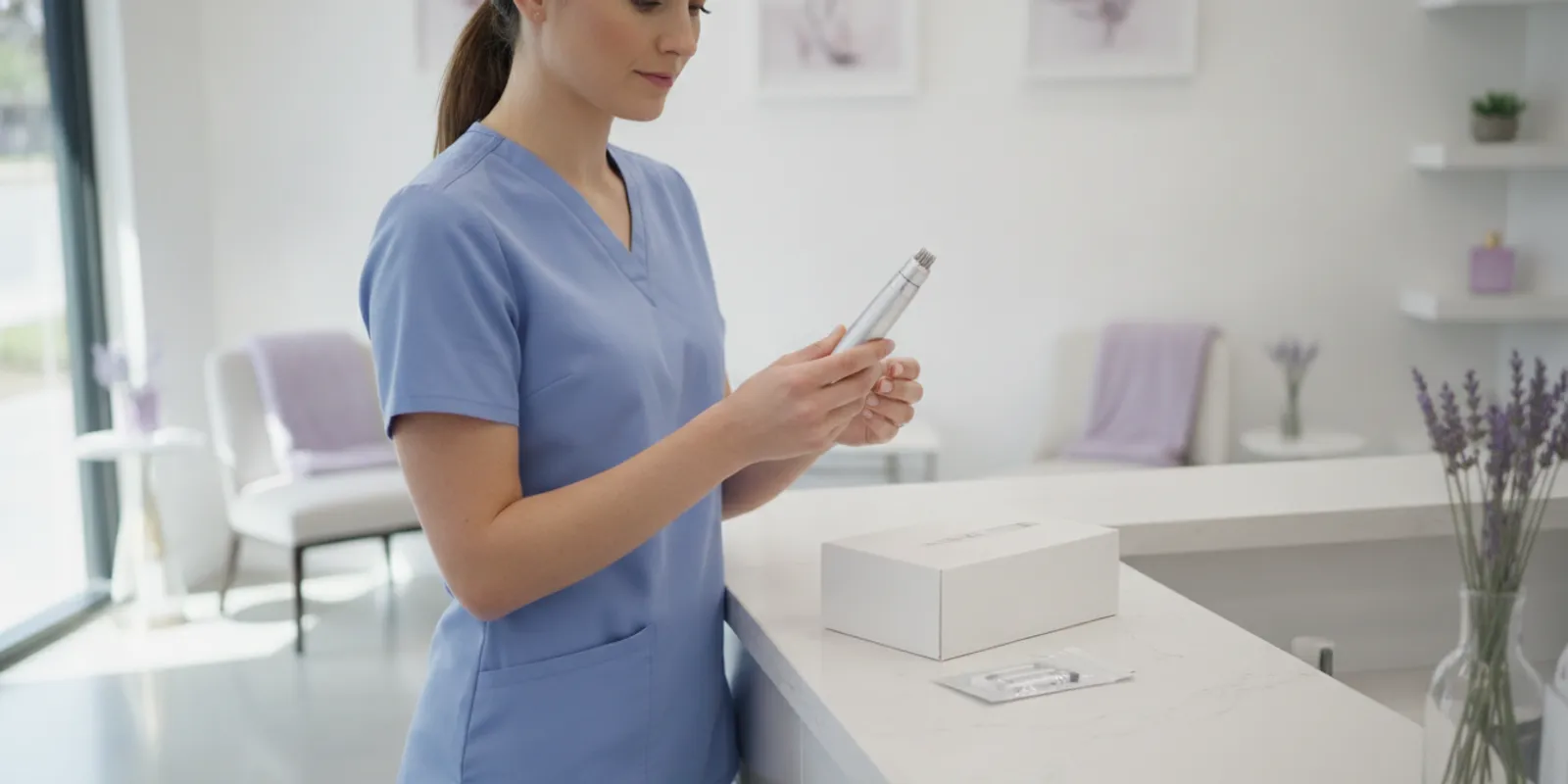
What is microneedling, and what should a practice understand before adding it to its services? Microneedling is a procedure that uses a device with fine needles to create controlled punctures in the skin. For professional practices, the term is only a starting point: device design, labeling, operator qualifications, local rules, and the practice’s protocols all shape how a service can be offered and described.
Talk with Emage Medical about professional devices
What does microneedling mean?
Microneedling, also called percutaneous collagen induction in some contexts, refers broadly to use of needles to make controlled openings in the skin. Devices may be manual or powered. A powered pen typically moves a disposable needle cartridge in and out of the skin, while a roller uses a rotating cylinder with needles. These terms describe broad device formats, not a guarantee that every product has the same design, intended use, or regulatory status.
In a professional setting, microneedling is a device-based service rather than simply an at-home skincare step. The practice needs to identify the specific device, understand its labeling and instructions, confirm that the intended operator and setting are appropriate, and establish procedures for consultation, infection prevention, records, and follow-up. The exact requirements may vary by product and jurisdiction.
Microneedling should also be distinguished from radiofrequency (RF) microneedling. A standard microneedling device uses needles; an RF microneedling system combines needles with radiofrequency energy. The combination changes the technology and the questions a practice must examine. For a separate overview of that modality, see what RF microneedling means for practices.
How does professional microneedling work?
A microneedling device is used to create small, controlled punctures. The precise way a device operates depends on its instructions for use, needle configuration, speed or depth settings, and intended purpose. A professional should not assume that settings or techniques transfer from one model to another simply because both products are called microneedling pens.
In practice, the procedure sits within a larger workflow. The provider first considers whether a service is appropriate for the individual and the practice’s scope. The provider then follows the applicable device instructions and established safety procedures. The practice records the product and relevant service details, explains realistic expectations, and provides follow-up information consistent with its protocols. This is a practice-planning overview, not a treatment protocol or individual medical advice.
Needle depth is one example of why the specific device matters. Products may have different adjustment ranges, cartridge designs, and instructions. A setting is not a universal recommendation, and a numerical range alone does not establish that a given procedure is suitable for a person, body area, or operator. Review the device’s current labeling and training materials rather than relying on generalized descriptions online.
What devices and approaches should a practice distinguish?
Before comparing equipment, define what category is being considered. “Microneedling” can refer to several formats, but a comparison is useful only when it accounts for the product’s intended use and practical requirements. The table below is a high-level orientation, not an endorsement or a substitute for product-specific labeling.
| Approach | What it generally describes | Practice questions to review |
|---|---|---|
| Manual roller | A handheld cylinder that rotates across the skin and carries needles. | What does the product labeling permit? How are use, handling, and disposal addressed? |
| Powered microneedling pen | A powered handpiece that moves a needle cartridge in a repeated motion. | What cartridges and settings are specified? What training, maintenance, and documentation apply? |
| RF microneedling | A device that combines needles with radiofrequency energy. | What are the system’s exact indications, instructions, energy controls, and operator requirements? |
| At-home cosmetic product | A consumer product marketed for personal use, which may differ from professional devices. | Is the product intended for the proposed setting and use? Do not assume its directions apply to a professional system. |
These categories are deliberately broad. Needle count, cartridge size, depth adjustment, power source, and additional energy components differ across products. To understand one purchasing detail, practices can review how cartridge sizes are discussed for professional devices. For the wider distinction between pen-style and RF systems, see microneedling pens versus RF microneedling machines.
What should a practice review before offering the service?
Begin with the device documentation, not a general online description. Confirm the product name and model, intended use, instructions for use, warnings, contraindications, cleaning and maintenance requirements, and consumable or cartridge requirements. Check that the materials are current and correspond to the exact device being considered. If information is unclear, request clarification from the manufacturer or distributor before building a protocol.
- Scope and oversight: Confirm which professionals may perform the procedure in the practice’s location and what supervision or medical oversight may be required. Requirements can depend on state or local rules, professional licensure, and the exact service.
- Training: Identify who provides initial training, what it covers, and how staff competency is documented. Training should address the actual device and practice workflow, not just generic microneedling concepts.
- Infection prevention: Review the instructions for handling the device and cartridges, skin preparation, protective equipment, environmental cleaning, and disposal. Use only procedures compatible with the product labeling and applicable standards.
- Consultation and records: Establish a consistent way to record the device used, cartridge or consumable details where applicable, settings or procedure details required by the product instructions, consent, and follow-up communications.
- Service fit: Consider room setup, appointment time, inventory, staff roles, maintenance, and how the service fits existing offerings before purchasing equipment.
A practice can use a written checklist to keep these questions visible. It should name an owner for checking labeling and jurisdictional requirements, another for training and competency records, and a person responsible for supplies and device maintenance. Review the checklist when the device, staff, service scope, or applicable rules change.
How should providers approach consultation and communication?
Consultation is an opportunity to determine whether the service is appropriate under the provider’s professional judgment and applicable protocols. It should not become a promise of a particular result. Ask relevant history and suitability questions using the practice’s approved process, and refer to qualified clinical guidance when a question falls outside the provider’s scope.
Explain what the device is, what the planned service involves at a high level, and what the person should expect from the practice’s process. Discuss possible risks, limitations, alternatives, and aftercare only in language supported by the device labeling and the provider’s approved materials. Do not make blanket assurances about comfort, recovery, safety, or results. Individual experiences and appropriate plans can differ.
Marketing should use the product’s exact name and supported intended-use language. Avoid treating the word “microneedling” as proof that two devices are interchangeable. Similarly, do not turn a general mechanism into a specific outcome claim. If a practice shares photographs or testimonials, it should follow applicable consent and advertising requirements and should not imply that one person’s experience predicts another’s.
How do labeling and regulatory status affect claims?
Device status is specific to the product and its regulatory pathway. A clearance or authorization statement for one device does not establish the status or intended use of another, and it does not support every marketing claim a practice might want to make. Check the exact model and relevant product documentation. For regulatory questions, consult the U.S. Food and Drug Administration’s medical-device resources and seek qualified regulatory or legal guidance when needed.
Keep regulatory language precise. Do not describe a product as FDA-cleared, approved, or indicated for a use unless that exact statement is substantiated for the product. Do not imply that a regulatory designation proves clinical effectiveness or a superior outcome. The device labeling, applicable rules, and professional standards—not a category label—should guide what the practice says and does.
This distinction is particularly important when comparing standard microneedling with RF microneedling. A device that adds an energy source may have different instructions, indications, precautions, or training needs. Review its own materials rather than borrowing claims or operating assumptions from a non-RF pen.
What training and documentation should be in place?
A thoughtful implementation plan extends beyond a product demonstration. Practices should decide how staff will learn the device, how competency will be assessed, and where records will be kept. Training should include the manufacturer’s instructions, routine setup and shutdown, cartridge handling, maintenance, the practice’s consultation process, and how staff escalate unexpected questions or events.
Documentation helps the practice reconstruct what occurred and support consistent communication. Depending on applicable requirements and the practice’s policy, records may include the device and model, the operator, the date, relevant settings and consumables, the consent and consultation documentation, and follow-up. Keep records factual and avoid unsupported interpretations or promises.
Establish a process for reviewing supplies and maintenance. Confirm that the selected cartridges or consumables are compatible with the system, that storage and use follow their instructions, and that ordering timelines will not disrupt scheduled services. For planning a new offering, Emage’s professional microneedling service launch guide can help frame broader operational questions.
How can a practice evaluate a professional device?
Start by writing down the practice’s needs before reviewing sales materials. Consider the patient population served, services already offered, provider qualifications, expected appointment workflow, room capacity, training requirements, and available time for compliance review. Then request device-specific documentation and a demonstration that addresses real operational questions.
- Can the supplier provide current instructions for use and clear product identification?
- What training is available, who delivers it, and how can staff receive follow-up support?
- Which cartridges and consumables are compatible, and how are they handled and replaced?
- What routine maintenance, warranty terms, or service procedures should the practice understand?
- How does the device fit the practice’s scope, local requirements, staffing, and service plan?
- What claims are appropriate to use in educational materials and patient communication?
Compare answers side by side rather than relying on a single headline specification. A device feature matters only in the context of the practice’s intended use and the product’s labeling. Cost is also more than the purchase price: practices can account for compatible consumables, staff training time, maintenance, and workflow needs, without assuming a particular revenue outcome.
How can a practice build a repeatable workflow?
A repeatable workflow gives the team a shared sequence without replacing clinical judgment. Start before the appointment by confirming that the device and service are within the practice’s approved scope. Use the practice’s established intake and review process to determine whether the provider needs more information or should defer the service. If the appointment proceeds, confirm that the correct system and compatible supplies are available and that the operator has completed the required training.
At the appointment, staff can follow the practice’s documented steps for identity confirmation, consent, explanation, setup, and record keeping. Use the device instructions for device-specific steps. Do not rely on memory when product labeling is available, and do not improvise a setting or technique to solve an equipment issue. Pause and seek appropriate guidance if the system, cartridge, or instructions do not match what was expected.
After the service, use the practice’s approved follow-up process and document relevant communications. Staff should know whom to contact if a person reports a concern or if an unexpected event occurs. The process should explain how to escalate promptly and how to preserve accurate records. The goal is not to make every visit identical; it is to keep responsibilities, communication, and device handling clear.
Review the workflow after training, when the team identifies a gap, or when product instructions or applicable requirements change. A short periodic review can reveal whether staff understand where the current instructions are stored, how to identify the correct consumables, and who is responsible for maintenance. Record updates with a date and an owner so staff can distinguish the current version from older materials.
What questions help set realistic expectations?
Expectations are part of service planning, not just promotional language. Before launching a service, consider how the practice will describe the procedure, the intended purpose as stated by the manufacturer, the limits of available information, and the need for individual assessment. Use straightforward language. If a detail is uncertain, say that it needs to be checked rather than filling the gap with a broad claim.
It may help to separate three kinds of statements in staff and marketing materials:
- Product facts: Verifiable details such as the device model, its components, and its own instructions.
- Practice process: What the practice does, such as how it conducts consultation, documents services, or provides follow-up.
- Outcome claims: Statements about what a person can expect. These require appropriate support and must not imply a guaranteed or universal result.
Keeping those categories separate helps avoid turning a product feature into a promise. For example, a device having an adjustable component does not by itself demonstrate that a specific setting is right for every person. Likewise, a general explanation of how needles work should not be presented as proof of a particular result. Staff should use approved language consistently across consultation materials, websites, and social posts.
What are common buying and implementation mistakes?
One frequent mistake is comparing devices using a single specification, such as needle count or maximum adjustment range. Those details may matter, but they do not replace review of labeling, training, compatible supplies, service requirements, and the practice’s intended use. Another is assuming the same protocol applies across manufacturers or formats. Confirm the exact instructions for the model being considered.
A second risk is planning around a marketing phrase rather than operational questions. Before purchase, ask to see relevant documentation, identify the person who will answer technical questions, and understand what staff training covers. Clarify what is included in the proposed arrangement and what the practice would need to source or manage separately. Avoid assumptions about consumables, maintenance, support, or warranty terms; ask for the terms in writing and review them for the specific product.
Finally, avoid launching before the practice has settled its responsibilities. The people responsible for clinical oversight, staff education, inventory, records, and service escalation should know their roles. If a practice cannot yet confirm applicable scope requirements or obtain current product instructions, treat those as open implementation tasks rather than details to resolve after appointments are scheduled.
For operational planning, a practice may also find it helpful to review Emage’s overview of microneedling contraindication considerations. That resource is not a substitute for the selected product’s instructions, provider judgment, or local rules; use it as a prompt to develop questions for the practice’s qualified clinical and regulatory reviewers.
Frequently asked questions
Is microneedling the same as RF microneedling?
No. Microneedling refers generally to use of needles to create controlled punctures. RF microneedling combines needles with radiofrequency energy. The added technology means the practice should review the specific system’s intended use, instructions, and training requirements.
Are professional microneedling pens interchangeable?
No. Products may differ in design, cartridges, settings, instructions, and intended use. A provider should follow the labeling and training for the exact model rather than transferring techniques or settings from another device.
Does FDA status establish that a treatment will work?
No. Regulatory status and intended-use language are product-specific and do not establish a guaranteed outcome or comparative superiority. Verify exact claims against the relevant device documentation and consult qualified guidance where needed.
Can every practice offer microneedling?
Not automatically. Eligibility can depend on professional qualifications, jurisdiction, the device’s intended use, and oversight requirements. A practice should confirm the applicable rules before offering the service.
Ask about professional microneedling options
A careful device review helps a practice make informed decisions, communicate clearly, and build procedures around the exact product and professional setting.