
CytoPen® Microneedling Pen: Plan the Room
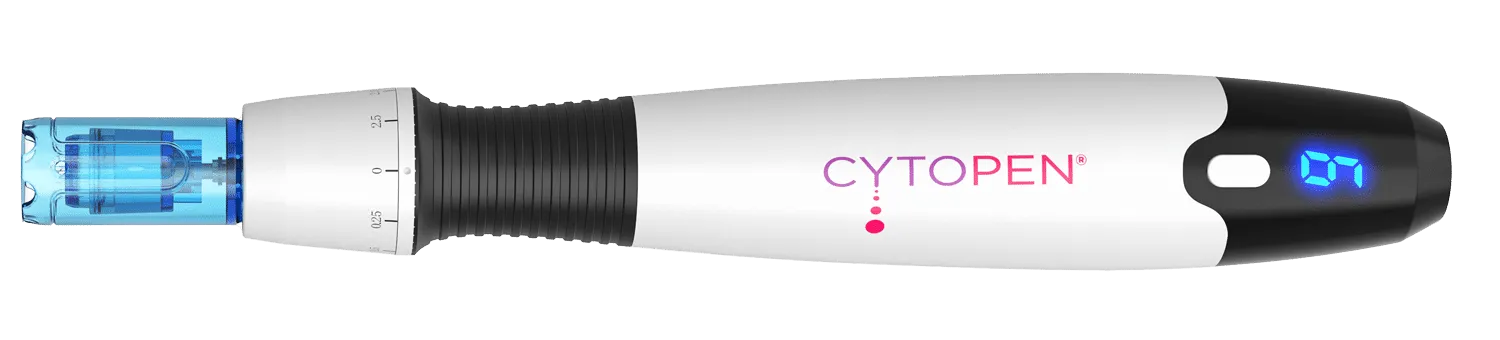
A CytoPen microneedling pen is one of two professional pens Emage Medical offers practices: CytoPen NG and CytoPen S2. Before a practice adds either pen, the useful question is not which model looks newer. It is whether the room, the cartridge routine, the records, and the people who will use it are ready.
Call (704) 412-3152 to talk with Emage about fitting a CytoPen into your treatment room.
Emage Medical, founded in 2001 and based in Charlotte, works with professional practices across the United States. The portfolio includes skin imaging, microneedling, the Preime DermaFacial, CytoSerum, and professional skincare, with product guidance, training, and support after the purchase. A pen sits in that relationship. It is not a gadget a team figures out alone on a Saturday.
This guide stays on the practice side of the decision. Hardware differences between the two pens already live on the CytoPen options page. Use that page for needles, power, shell, and list price. Use this one to plan the work around the pen.
What a CytoPen Microneedling Pen Is in a Practice
On the live microneedling page, Emage presents two pens and asks practices to start with power, shell, and tip options. CytoPen NG is the battery-powered pen with a plastic shell and a 14-needle scalloped tip. CytoPen S2 is the aluminum-shell pen with battery and electric power, 36- and 12-needle tips, and a Nano tip option. Neither pen is offered for rent. Current list prices on that page are $2,490 for NG and $3,990 for S2, and both purchase paths run through BoxedUp.
Those facts are the product facts. They do not say how the pen will sit next to the treatment bed. They also do not say who may use it, or what the front desk should answer when a client asks what the appointment includes. That is the gap this article fills.
A powered pen is also different from a roller and from radiofrequency microneedling. The U.S. Food and Drug Administration describes motorized microneedling devices as instruments whose needles move in and out of the skin, sometimes with adjustable depth and speed. An RF system adds energy. Emage keeps standard pens and radiofrequency microneedling on separate paths, including Cyto-RF. Do not borrow language from one device and paste it onto the other.
Older marketing pages have called both pens FDA-cleared and cited specific 510(k) numbers. The current comparison page does not repeat those numbers. Public FDA records for the numbers in that older copy name different devices. Do not put a clearance number, an indication, or a result claim in a menu until Emage gives you current labeling for the exact model. The FDA's microneedling devices page explains why. Authorization is specific to a product and a use, not to the whole category.
Read the page as a buyer, not as a clinician writing a protocol. The comparison tells you what is in the box description. It does not tell you how long a room reset takes, who may open a cartridge, or which words belong in a consult. Those are practice decisions. Bring them to the tour instead of guessing them from a product grid.
How the Pen Changes the Treatment Room
A pen changes the room more than it changes the brochure. Staff need a clear surface for the handpiece, a place for the power setup the model uses, and a path to dispose of a used cartridge without crossing clean supplies. If the pen is cordless for part of the day, someone owns charging before the first appointment, not during it.
Walk the room before you request pricing. Note where the provider stands and where the client reclines. If the model can run on electric power, note where a cord would cross the floor. Note glove changes and the cartridge disposal point. Check whether a second person can hand a new cartridge without breaking the setup. A short product tour is more useful after that walk than before it.
Emage's tour form lists Microneedling Pen - CytoPen as its own interest, separate from skin imaging, the Preime DermaFacial, and CytoSerum. Name the model you are considering in the message. The comparison page says the same thing in shorter form. Tell Emage which model you want to see. Ask to see the controls, the tips, and the current documentation.
The homepage also separates purchase, eligible rental, and a meeting with a specialist. CytoPen NG and S2 are buy-only. A meeting is still the right first step for a device a team will use every week. Financing, when a practice wants it, is discussed as terms built around eligible equipment. Confirm the current terms for the pen you are considering. Do not assume a monthly figure from an older article still applies.
Space is the part teams skip. A pen does not need a new room, but it does need a lane that stays clean from the first glove change to the last disposal. If the only counter is also the retail shelf, move the retail products before the first service day. If the sharps container is in the hall, the reset will leak time into the next appointment. Write those constraints down. They matter more than the color of the handpiece.
A short room checklist
- Mark where the handpiece, clean cartridges, and used cartridges will sit.
- Decide who charges or plugs in the pen before the first client.
- Confirm the disposal point is inside the room, not down the hall.
- Write which model you want to see, and bring that note to the tour.
- Note the cord path if the model can run on electric power.
Cartridges, Setup, and the Time Between Clients
Both pens use disposable tips. NG lists one 14-needle scalloped tip and no Nano option. S2 lists 36- and 12-needle tips plus a Nano tip, with a screw-in attachment. The comparison page is direct about the next step. Ask Emage to show the options and confirm the package for the model you are considering. Do not build a supply order from a blog.
Cartridge count changes inventory, not just the look of the handpiece. A practice that plans one facial service may only need the tip that matches that service. A practice that wants more than one tip has to stock, label, and train on each one. The cartridge size guide is the place for needle-count questions. This section is about the minutes between clients.
Time between clients is where pens succeed or stall. Someone opens a new cartridge, confirms it is seated, and does not set it down on a used towel. Someone else wipes the surfaces the last appointment touched and resets the chart. If that sequence is vague, the pen will sit in a drawer even if the hardware is excellent.
Ask these supply questions on the tour, and write the answers into the purchasing notes:
- Which tips ship with the model, and which are ordered separately?
- How are tips packaged, and what is the reorder path for an existing customer?
- What do the instructions for use say about attachment, single use, and disposal?
- Who on your team is allowed to open a cartridge and start the handpiece?
Existing Emage customers already have a portal for purchasing. New practices should not guess that the same login covers a first device order. The public path for a first look is the product tour or the contact form, then BoxedUp once you are ready to buy the listed model.
Build the reorder like any other clinical supply. Name a par level for the tips you will actually use, a person who checks it weekly, and a backup if that person is off. A pen with no spare cartridge is a cancelled appointment, not a minor inconvenience. Confirm the package contents before you set that par level. The comparison page says to confirm current offer details and package contents with Emage, and that line is there for a reason.
Single use is a workflow, not a slogan. The person who opens the cartridge should be the person who seats it, or the handoff should be written down. A cartridge that sits on a tray between two people is the moment most rooms get sloppy. Time that handoff once during training. If it takes longer than the gap you scheduled, change the schedule before you change the marketing.
What to Put in the Chart and the Script
A pen does not create a protocol by itself. The practice still decides who may perform the service under state rules, what the consult covers, and which words are allowed in ads. Federal device rules are not a substitute for that local check. Under 21 CFR 878.4430, a microneedling device for aesthetic use is a Class II device that mechanically punctures skin. The classification also says this category does not include devices intended to deliver topical products such as cosmetics, drugs, or biologics. Read the regulation, then read the labeling for the exact pen, before you describe serum use in a menu.
The FDA's public page says the agency has authorized specific microneedling products for specific uses. Those uses include the look of facial acne scars, facial wrinkles, and abdominal scars in adults 22 and older. That is a category statement. It is not a claim that every pen, including a CytoPen model, is cleared for each use. Match your script to the current instructions for the model in your hand.
A practical chart for a pen service names the model, the operator, the cartridge or tip if your policy records it, and the consent conversation. It does not promise a result, a recovery time, or a comfort level. Individual plans differ, and Emage does not publish outcome claims for these pens on the current comparison page.
| Practice item | What to decide before you buy | Where to confirm it |
|---|---|---|
| Model on the shortlist | NG, S2, or both for the tour. Do not decide from a headline. | CytoPen comparison page and the tour form |
| Who may perform the service | License, supervision, and your state's rules for this procedure. | Your counsel or licensing board, plus device labeling |
| Cartridge plan | Which tips you will stock and who reorders them. | Ask Emage to confirm package contents |
| Room reset | Clean surface, charging or cord path, and disposal point. | Walk the room, then ask to see setup on the tour |
| Words you will use | No clearance number or result claim without current labeling. | FDA microneedling page and the model instructions |
| Support after delivery | Training, product questions, and the existing-customer portal. | Marketing and support page, then your Emage contact |
Keep the script short. Say which pen the practice uses. Say that it is a professional device, not an at-home roller, and that the consult covers whether the service fits. Send comparison shoppers to the model page instead of reciting specs from memory. Specs change, and the live page is the record.
Front-desk language should match the chart. If the provider will not promise a number of sessions, the person who answers the phone should not either. Write one sentence the whole team can say, and one sentence they will not say. The second list is usually the more useful one. Leave clearance numbers, downtime promises, and comfort claims off it until current labeling supports them.
Serum language needs the same restraint. The device classification cited above excludes devices intended to deliver topical products. If your menu pairs a pen visit with a serum, describe that pairing as your practice protocol, not as a feature of the pen, unless the current instructions for that model say otherwise. Ask Emage to show you those instructions on the tour.
Training, Support, and the First Thirty Days
Emage describes the relationship after a device choice in plain terms: product guidance, education and training, and ongoing support. The marketing and support page invites a specific ask. Which training is available, how is it delivered, and what is included with the purchase or warranty? The page also covers marketing materials and product questions. Ask those questions for the pen. A general promise of support is not a date on the calendar.
Use the first month to prove the workflow, not to invent clinical claims. Pick one or two services you are prepared to describe accurately. Train every person who will hand the pen, not only the provider who attended the tour. Have them set up, change a cartridge, and reset the room while someone watches the clock. Write down the stuck points and send them back to Emage while the purchase conversation is still open.
About Emage also notes leasing and financing terms built around a practice's needs for eligible equipment. If cash flow is the real question, say so on the tour and ask for the current terms for that pen. Do not publish a monthly payment, a zero-down offer, or a break-even story you have not confirmed. Older CytoPen cost articles include figures and financing lines that do not match the current comparison page. Treat the live product page as the price source.
Practices still deciding whether a pen belongs on the menu can read how to add professional microneedling services and what a professional microneedling pen is. Those guides cover the service and the device category. They do not replace the CytoPen model page. If the real fork is a pen versus an RF platform, start with the pen versus RF machine guide and the Cyto-RF path. Come back to the pen only if a standard handpiece is the fit.
A useful first month has three checkpoints. In week one, every person who will touch the pen sets it up once while someone else watches. In week two, the team runs the reset against a real appointment gap and writes what ran long. In week three or four, the owner sends those notes to Emage and asks which of them the included training already covers. That sequence keeps support concrete. It also stops the pen from becoming a device only one person knows how to start.
Marketing materials belong in the same conversation. Ask which assets Emage can share for a professional pen, and which claims those assets avoid. Do not paste an older social caption into a new menu. If a caption names a result, a recovery window, or a clearance number, hold it until the current labeling matches. The marketing page is the place to ask that question, not a substitute for the answer.
Questions to Bring to the CytoPen Microneedling Pen Tour
Show up with a short list. The public tour page describes a complimentary virtual tour, with a remote demonstration that takes less than 10 minutes and a direct meeting with an Emage expert. There is no obligation and no cost listed for the tour itself. Confirm the current format when you book, and use the time for the model you already named.
Ten minutes goes further when the practice has already walked the room. Do not spend the opening on a question the comparison page already answers. Spend it on package contents, the tip you will stock, and who on your team may use the pen.
- Which model are we looking at, and what is in that model's current package?
- Can we see how a tip attaches and how a used tip leaves the setup?
- What training is included, who can attend, and how is it delivered?
- What does current labeling allow us to say, and what should we leave out?
- If we need financing, what are the current terms for this pen?
- After delivery, do product questions go to the same person who led the tour?
Write the answers next to the owner's name. A pen that no one owns becomes a closet item. A pen with a named operator, a cartridge reorder, and a support contact becomes a service the front desk can explain without guessing.
When the shortlist is real, open the comparison page and follow the purchase path for that model, or ask Emage to confirm the package before you buy. The page says to confirm current offer details and package contents. That is the right last step. The tour form is at the product-tour page, and the phone number on the site is (704) 412-3152.
Bring one photo of the treatment room if the tour is remote. A counter, a cord path, and a disposal point are easier to discuss when the expert can see them. You do not need a polished shot. You need the constraints that will still be there on Monday morning.
Call (704) 412-3152 or compare CytoPen options before you buy.
Frequently Asked Questions
What is a CytoPen microneedling pen?
It is Emage Medical's professional microneedling pen, sold as two models: CytoPen NG and CytoPen S2. NG is battery powered with a plastic shell and a 14-needle tip. S2 adds electric power, an aluminum shell, more tip choices, and a Nano tip option. Start with the live comparison page for the current hardware list.
Does Emage rent the CytoPen?
No. The comparison page lists both CytoPen NG and CytoPen S2 as not available for rent. You can buy the model you choose through BoxedUp after you confirm the package. Other Emage devices may have different rental rules, so do not copy this answer onto another product.
Which CytoPen model should our practice buy?
This guide does not pick a model. Compare power, shell, and tips on the product page, then bring your room and service notes to a tour. A single-tip menu and a multi-tip menu create different training and inventory work. Choose the pen your team will actually set up between clients.
Can we advertise the CytoPen as FDA-cleared for acne scars?
Not from this article. Older Emage pages have used clearance language and 510(k) numbers that do not match the current comparison page or the public FDA records for those numbers. Ask Emage for the current labeling for your exact model, and keep category statements on the FDA microneedling page separate from claims about this pen.
What should we prepare before the product tour?
Walk the treatment room, name the model you want to see, and list who will use the pen. Bring questions about package contents, cartridge reordering, training, and the words you may use in a consult. The tour form has a field for the CytoPen, and the call line on the site is (704) 412-3152.