
Hydradermabrasion Machine: What Buyers Should Compare
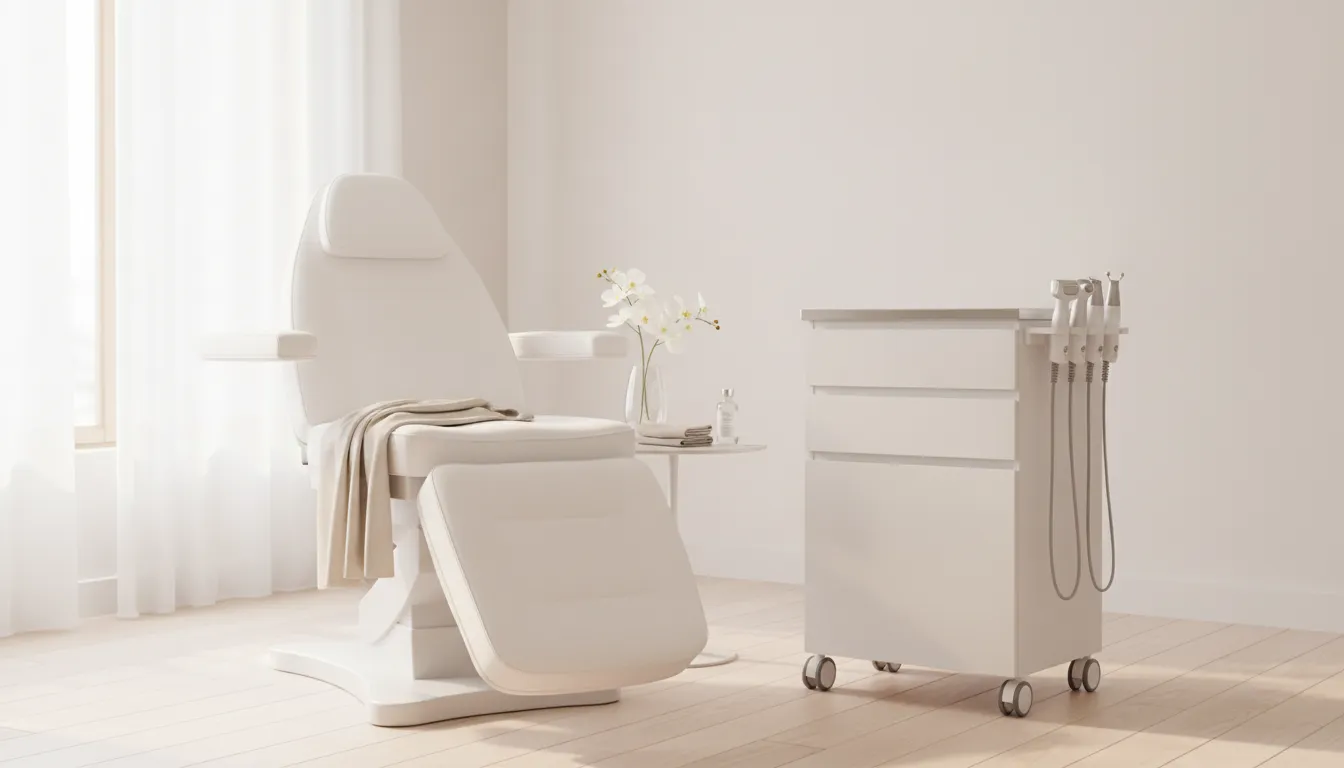
Choosing a hydradermabrasion machine is a practice-planning decision, not just a search for the machine with the longest feature list. The right comparison should connect the device to the services you want to offer, the staff who will use it, the space you have available, the supplies and training you will need, and the way you plan to explain the service to clients.
Call (704) 412-3152 to request a quote or product tour
For a medical spa, dermatology practice, plastic surgery practice, or other aesthetic business, the buying process should answer a practical question: can this equipment fit the practice you are building? Use the comparison points below to organize conversations with manufacturers and distributors. Device instructions, qualified oversight, local requirements, and the product’s current documentation should always control clinical and operational decisions.
Start with the service you want to build
Before comparing screens, handpieces, or promotional claims, define the role a hydradermabrasion machine would play in your practice. Are you adding a new facial service, expanding an existing menu, or looking for a platform that can support more than one technology family? The answer changes which features deserve the most attention.
Write down the service concept in operational terms. Consider:
- Which clients and appointment types the service is intended to serve.
- Which team members may prepare, operate, clean, and document the equipment.
- How the service will fit into the schedule and treatment-room layout.
- Which solutions, consumables, attachments, and replacement parts the practice will need.
- What training, supervision, records, and client communication the practice requires.
- How the service will connect to consultation, follow-up, and other offerings.
This exercise keeps the purchase grounded in the practice’s actual needs. A machine can look attractive in a demonstration and still be a poor fit if the workflow, staff responsibilities, supply requirements, or service expectations are unclear.
Compare the core hydradermabrasion function
Hydradermabrasion generally refers to a water-and-vacuum facial technology. The hydradermabrasion overview explains the category at a high level, but machines can differ in how the function is delivered, what the operator can adjust, which solutions are intended for use, and how the manufacturer documents the workflow. Do not assume that two machines with the same category name work the same way.
Ask the distributor to explain the complete operating sequence for the exact model you are considering. Request documentation that shows the intended use, compatible solutions, cleaning requirements, maintenance steps, and any operator restrictions. A clear answer is more useful than a broad statement that the device is “all in one.”
You should also ask what the machine includes at delivery. Confirm whether the quoted equipment includes the required handpieces, tubing, reservoirs, starter supplies, manuals, training, warranty coverage, and setup support. If an item is sold separately, include it in your comparison rather than treating the base machine price as the full investment.
Decide whether integrated technologies matter
Some practices want a hydradermabrasion machine to support one focused service. Others are evaluating a multifunction platform that can support several technology families in one treatment-room setup. Neither approach is automatically better. The useful question is whether the additional capabilities match your menu, staffing, and plan for growth.
The hydradermabrasion equipment category at Emage Medical presents the Préime DermaFacial® as a professional platform with five technology families: AquaB hydradermabrasion and vacuum-based technology, VibroX microdermabrasion with vibration and red LED, MicroT microcurrent technology, Collagen+ radiofrequency technology, and UltraB ultrasound technology. If you are considering a multifunction machine, use those named functions as a prompt for a more detailed conversation about what each one requires and how your team would use it.
A broader platform can simplify equipment planning when the practice genuinely expects to use the available functions. It can also add training, documentation, cleaning, storage, and workflow questions. Ask whether your team can explain every included function in plain language and whether the practice has a realistic plan to use it. Do not pay for capabilities that have no role in the services you intend to offer.
Use a side-by-side comparison sheet
A comparison sheet keeps a product demonstration from becoming a list of disconnected features. Record the answer for the exact model, not a product family or a different configuration.
| Comparison area | Questions to ask | Why it matters |
|---|---|---|
| Core function | What hydradermabrasion process, controls, and attachments are included? | Confirms that the machine supports the service you intend to offer. |
| Integrated technologies | Which additional functions are included, and what training or supplies do they require? | Separates useful capacity from features the practice may not use. |
| Workflow | What are the setup, cleaning, storage, and room-turnover responsibilities? | Shows whether the device fits the team and treatment room. |
| Supplies | Which solutions, disposables, and replacement parts are required? | Reveals ongoing access and operating costs beyond the base price. |
| Support | What training, warranty, maintenance, and troubleshooting help is provided? | Clarifies who supports the practice after installation. |
Ask how the workflow fits the treatment room
A hydradermabrasion machine should work in the room where the service will actually happen. During a demonstration, look beyond the front of the device. Consider the footprint, mobility, access to outlets and water or waste handling where applicable, handpiece storage, solution storage, operator position, and the space needed to clean and reset the station.
Ask the representative to walk through a complete start-to-finish workflow. The demonstration should cover setup, patient or client positioning, attachment changes, solution handling, operator controls, cleanup, documentation, and shutdown. If the machine supports multiple functions, ask to see how the team changes between them rather than reviewing each feature in isolation.
Workflow questions to bring to the demonstration include:
- How long does routine setup and room turnover take?
- Where are solutions and single-use or replaceable items stored?
- What must be cleaned after each use, and what requires scheduled maintenance?
- Which parts are handled by the operator, and which require service support?
- What happens if a handpiece, hose, reservoir, or control does not work as expected?
- How does the device fit beside the other equipment already in the room?
The goal is not to promise a particular appointment time. It is to understand the work the machine adds to the team’s day and whether that work is manageable at the volume you expect.
Compare solutions, consumables, and ongoing access
The machine is only one part of the operating system. Before you choose a model, ask for a complete list of the solutions, tips, filters, cartridges, tubing, disposables, and other consumables that the manufacturer recommends or requires. Clarify which items are reusable, which are single-use, how they are stored, and how the practice orders replacements.
Ask how product access works after the initial sale. Useful questions include:
- Are supplies ordered directly from the manufacturer, distributor, or another approved channel?
- What are the current package sizes, ordering steps, and estimated lead times?
- Are there minimum order quantities or recurring supply commitments?
- Which products are compatible with the exact model and handpiece?
- How are changes to formulas, packaging, or instructions communicated?
- What should the practice do if a required item is temporarily unavailable?
Do not substitute a different solution or attachment simply because it appears similar. The device’s current instructions and the manufacturer’s compatibility information should govern what the practice uses. A distributor should be able to explain the approved supply path without asking the practice to guess.
Review training, oversight, and documentation
A machine comparison should include the people who will use and oversee it. Ask what training is provided, who delivers it, whether the training is device-specific, and how the practice documents completion. Find out whether the team receives written operating materials, cleaning guidance, troubleshooting information, and a way to ask follow-up questions after installation.
Training is not the same as permission to perform a service. The practice must confirm which staff members may operate the equipment under its own policies and the rules that apply in its location. The U.S. Food and Drug Administration explains that medical devices are placed in risk-based classes with different regulatory controls, so use its regulatory controls overview as a starting point rather than assuming a general category label answers the requirements for a specific model. A qualified person responsible for practice oversight should review the device documentation, service plan, screening process, records, and client communication before the machine is added to the menu.
Ask for a clear division of responsibilities. Someone should own equipment maintenance. Someone should confirm that current instructions are available. Someone should review supply inventory. Someone should handle incident escalation and manufacturer contact. If those responsibilities are not assigned, a machine purchase can create avoidable gaps even when the device itself is sound.
Evaluate the client and consultation experience
The equipment should make sense not only to the operator but also to the person considering the service. Ask how the manufacturer describes the technology, what language the practice can use in marketing, and which statements require qualification. Avoid building your menu around vague promises or before-and-after expectations that are not supported by the device documentation and the practice’s own review process.
Consider the consultation path. A practice may use a skin-imaging system or another consultation tool before discussing services, but the tool does not replace the judgment of a qualified provider. Make sure the team can explain what the hydradermabrasion service involves, what the machine does, what it does not do, and when a client should be referred or deferred under the practice’s policies.
Also compare the support available for launching the service. Some buyers need help organizing staff education, product information, and marketing materials. Emage Medical describes its marketing and practice support as part of the broader equipment conversation. Ask what is included, who supplies it, and whether the materials can be reviewed by your practice before publication. Support is most useful when it helps the team communicate accurately and operate consistently.
Put price in a total-cost comparison
The purchase price is an important comparison point, but it is not the whole cost of a hydradermabrasion machine. Build a simple worksheet that includes the equipment, included accessories, shipping or setup, training, warranty, service, consumables, replacement parts, storage, and any room changes. Ask which costs are one-time and which recur as the service volume grows.
For a concrete example, the Préime DermaFacial® product page lists an MSRP of $39,990 and states that the system is not available for rent. That published figure helps a buyer understand the listed position of that specific system, but it should not be treated as a quote for every practice or as a complete estimate of ownership. Confirm the current price, what is included, taxes or delivery details, warranty terms, and ongoing supplies with the distributor. You can also contact Emage Medical to organize the questions for a current equipment discussion.
When comparing two machines, use the same assumptions for both. A lower base price may not remain lower after required handpieces, supplies, training, service, or replacement parts are included. A multifunction platform may also have a different value proposition from a single-function device, but that value depends on whether the practice will use the available functions.
Check support after installation
Ask what happens after the machine arrives. A responsible comparison should cover installation, setup, training follow-up, troubleshooting, preventive maintenance, repairs, and replacement parts. Confirm how the practice contacts support, the hours of operation, what information the support team needs, and how urgent service issues are handled.
Review the warranty and service terms before signing. Identify what is covered, what is excluded, whether labor and shipping are included, and whether a third party can service the device. Ask how software, controls, or documentation updates are communicated if the machine has digital features.
Finally, ask how the distributor supports a practice that is still refining its workflow. The best conversation should leave you with a list of next steps, not just a product brochure. Request the exact model documentation, current quote, included-items list, training outline, supply information, and service terms so the practice can compare the offer fairly.
Use a buyer checklist before requesting a quote
Before you choose a hydradermabrasion machine, make sure you can answer these questions:
- What service or services will the machine support in our practice?
- Which functions are essential, and which are optional for our current plan?
- What is included in the quoted equipment package?
- Which solutions, consumables, and replacement parts are required?
- How will our team handle setup, cleaning, documentation, and maintenance?
- What training is provided, and what ongoing support is available?
- What staff roles and oversight requirements apply in our location?
- How will the machine fit into our room, schedule, and client consultation?
- What is the total cost of ownership under our expected service volume?
- What should we review before adding the service to our menu?
If a representative cannot answer a question, ask for the answer in writing before making a decision. A clear comparison protects the practice from buying a device that is difficult to staff, supply, explain, or maintain.
Compare the machine with your practice, not just with another brochure
The best hydradermabrasion machine for one practice may not be the best choice for another. Compare the core technology, integrated functions, workflow, consumables, training, oversight, support, and total cost against the way your team actually operates. Then confirm the current product documentation and the requirements that apply to your business before you move forward.
Emage Medical can help practices review the Préime DermaFacial® platform, its five technology families, and the questions that belong in an equipment conversation. Visit the hydradermabrasion equipment overview or request a product tour to continue the comparison.