
Hydradermabrasion vs Chemical Peel Guide
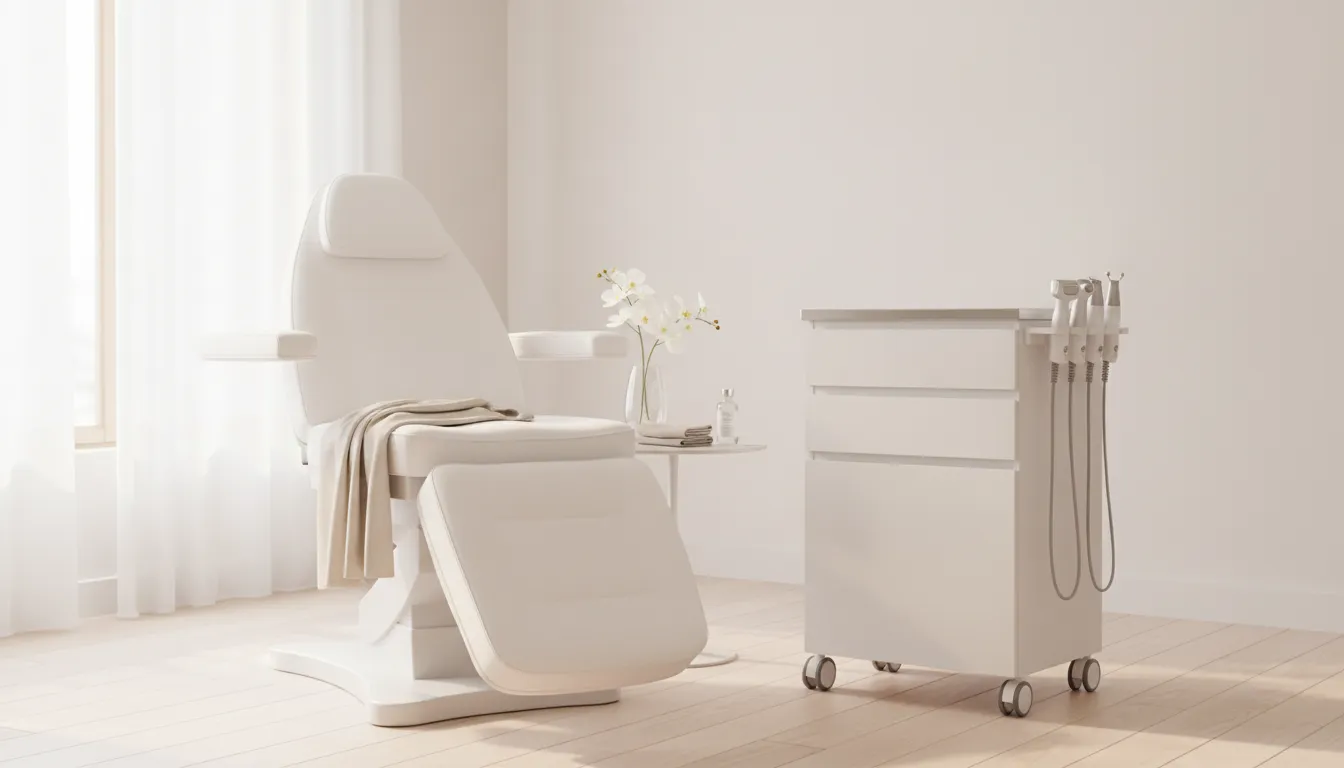
A hydradermabrasion vs chemical peel decision is a service-design question, not a ranking of which facial is better. One is a device-based facial workflow. The other uses a chemical agent on the skin. A practice should compare how each service is staffed, documented, and explained before it adds either one to the menu.
Call (704) 412-3152 to plan a product tour
Emage Medical works with medspas, dermatology practices, plastic surgery practices, and esthetic teams across the United States. The portfolio includes skin imaging, microneedling, the Preime DermaFacial, and professional skincare, with product education and support. Contact Emage if you want to review a device against the menu you already run. This guide stays on planning. It does not tell a clinician which service to perform, and it does not promise a result.
What Is the Difference in a Hydradermabrasion vs Chemical Peel Comparison?
Hydradermabrasion is a water-and-vacuum facial technology. On the Preime DermaFacial, that function is AquaB: hydradermabrasion and vacuum-based technology used with Preime DermaCeuticals solutions. The exact steps, solutions, and handpieces still depend on the device and its instructions.
A chemical peel is a different category. The U.S. Food and Drug Administration warns consumers not to buy or use certain chemical peel skin products without appropriate professional supervision. The agency has not approved any chemical peel products. It says consumers should only consider them under the supervision of a dermatologist or a licensed and trained practitioner. Read the FDA chemical peel warning.
That warning is about product use and supervision. It is not a buying guide for a device, and it is not a claim that one service outperforms the other. A practice still has to match any peel product, concentration, and protocol to its own licensure and medical policies.
The FDA also notes that many marketed peel products contain trichloroacetic acid, glycolic acid, salicylic acid, or lactic acid. Concentration, number of applications, and how long a product stays on the skin all affect the risk of injury, including chemical burns. Those variables belong in a practice protocol. They do not belong in a marketing slogan.
Use the hydradermabrasion overview when the team needs the category itself. Use this page when the question is whether a chemical peel service and a hydradermabrasion service answer the same practice need. They usually do not.
How Should a Practice Place Each Service on the Menu?
Start with the job each service is meant to do in your menu. Hydradermabrasion is often planned as a device-based facial visit. A chemical peel is often planned as an acid-based service with its own screening, consent, and follow-up rules. Putting both under one "facial" label hides the work each one requires.
Ask who the service is for inside your current book of business. A new-client facial, a maintenance visit, and a service that needs medical oversight are different appointments. If the team cannot explain that difference in plain language, the menu item is not ready.
Image Pro skin imaging can support the consultation before either service is discussed. Image Pro systems are meant to show clients what the provider sees. They do not choose a treatment, and they do not measure whether a peel or a hydradermabrasion visit is appropriate. That judgment stays with the qualified provider and the practice protocol.
Keep related comparisons in their own lanes. A hydradermabrasion and microneedling comparison covers a needle-based device. A microdermabrasion comparison covers mechanical exfoliation. Neither one answers how a chemical peel service should be staffed.
Positioning should stay descriptive. "Premier," "advanced," and "versatile" can describe a multi-modality platform when you also name the functions. They should not turn into a claim that hydradermabrasion is better than a peel, or that a peel is better than a device facial.
How Do the Visit Workflows Compare?
Compare the whole visit, not the minutes a handpiece or a product is in use. Map the path from inquiry to room reset. Include consultation, eligibility review, consent, setup, the service itself, cleaning, and the follow-up the practice is prepared to give.
A hydradermabrasion visit is organized around a device. Staff confirm the planned function, the solution, the handpiece, and the instructions for that system. On Preime DermaFacial, AquaB is one of five named technologies. The others are VibroX, MicroT, Collagen+, and UltraB. A practice can review them one by one. It should not treat the set as five automatic add-ons for every client.
A chemical peel visit is organized around the product and the person who may apply it. The team needs a written rule for screening, concentration, timing, neutralization if the product requires it, and what the client is told afterward. Those rules come from the product labeling and from the practice's clinical leadership. They do not come from a device brochure.
Room turnover differs too. A device visit needs a plan for handpieces, solutions, and cleaning between clients. A peel visit needs a plan for product control, waste, and any supplies the protocol names. If both services share a room, write the reset for each one. Do not assume one checklist covers both.
Client language should match the workflow. Say what the visit includes. Say what it does not include. Avoid before-and-after promises, downtime guarantees, and phrases that imply every skin concern is a fit. If a detail is not in the protocol, leave it out of the script.
What Should the Practice Compare Before It Builds the Service?
Use one table for both options. Fill it with your own answers. A blank cell is a reason to pause, not a reason to guess.
| Planning question | Hydradermabrasion | Chemical peel |
|---|---|---|
| Core modality | Water-and-vacuum device workflow. Steps depend on the system and its instructions. | Acid-based product applied to skin. Agent, concentration, and timing are protocol decisions. |
| What to verify first | Intended use, handpieces, solutions, and training for the selected device. | Product labeling, who may perform the service, and required supervision. |
| Visit design | Consultation, device setup, planned function, cleaning, and follow-up. | Consultation, screening, application rules, aftercare instructions, and follow-up. |
| Consumables | Confirm solutions and tips for that machine. Ask which formulas the model uses. | Confirm product sourcing, storage, and single-use or multi-use rules from labeling. |
| Staff and oversight | Train each function the practice plans to offer. Confirm scope for the setting. | Limit the service to people licensed and trained for that peel. Document oversight. |
| Menu role | Often a device facial that can sit beside other services without replacing them. | Often a separate service with its own consent and explanation. |
| Claim boundary | Describe the technology. Do not promise a skin result. | Describe the service category. Do not promise a skin result. |
The table is a planning aid. It is not a protocol, and it is not a statement that either column is safer or more effective. A qualified provider still decides whether a service is appropriate for a specific client.
How Should Training and Oversight Be Reviewed?
Training is part of the purchase, not a later extra. Emage provides product guidance before a purchase, clinical training for the team, and support after setup. Ask what the training covers, who attends, and how a new hire is trained later. A demonstration is not the same as a competency plan.
For the Preime DermaFacial, two handpieces are registered as Class 2. That status is prescriptive and requires some degree of oversight. It does not mean the whole system is closed to a day spa or an esthetician. A practice can review a pathway that does not use those two handpieces, or a pathway that includes a medical director. Confirm the pathway for the setting you actually operate.
Chemical peel oversight is a separate review. The FDA's public warning points consumers toward a dermatologist or another licensed and trained practitioner. Your state board, medical director, and product labeling decide what your team may do. Do not copy another practice's menu and assume the same roles are allowed.
Write the supervision rule in the same document as the service steps. Name who screens, who performs, who is available if a question comes up, and who reviews the chart. If that page is blank, the service is not ready to schedule.
Also separate device training from peel training. A team member who is competent on a hydradermabrasion handpiece is not automatically competent to apply a chemical peel. Cross-training can be useful. It still needs its own checklist.
What Operating Details Change the Comparison?
Consumables change the weekly cost and the weekly workflow. For hydradermabrasion, confirm which solutions the machine uses before you estimate supply orders. Emage's formula directory lists CytoSolutions Solution 1, Solution 2, Solution 3, and Atomizer Solution. Tell Emage the machine model so the team can check which formulas it uses. Do not describe those formulas as a treatment outcome.
Preime skincare is a different conversation from the device. Preime DermaCeuticals and Preime Derma Professional are two collections. Purchasing questions for those lines go to Alexandria. They are not a substitute for a peel product, and they are not exosome products.
Equipment ownership is also different from offering a peel service. On the Preime DermaFacial page, Emage states that the platform is available to purchase only and is not available for rent. Emage Medical is the exclusive U.S. distributor of the Preime DermaFacial system, and the system is made in Spain. Financing pages on the site apply to eligible devices. They do not change the buy-only status of this platform. Confirm the current published price on that page before you budget.
A peel service may not require a capital device at all. It still requires product cost, storage, documentation, and staff time. Compare those operating needs with the device's solutions, tips, and service time. Leave monthly payment figures out until Emage confirms a written offer for a specific device.
Support after purchase matters on the device side. Ask who answers a clinical-workflow question, who answers a service question, and how product education is delivered to the team. Emage's model is technology plus education and an ongoing partnership, not a one-time shipment.
Which Questions Should You Ask Before You Choose?
Bring the same question list to a product tour and to any peel-product review. The point is to see the gaps, not to force a winner.
- What is the service supposed to do in our menu, in one sentence a client can understand?
- Who on our current team is allowed to perform it, and what oversight does that require?
- Which instructions, labeling, or device documents will our protocol cite?
- What supplies are required each week, and who orders them?
- How is the room reset, and how long does that take on a full book?
- What will we refuse to claim in ads, consults, and aftercare cards?
- What training exists for a new hire six months from now?
On a Preime tour, ask to see the machine, the five technology handpieces, and the current product documentation. The technologies are AquaB for hydradermabrasion and vacuum, VibroX for microdermabrasion with vibration and red LED, MicroT for microcurrent, Collagen+ for radiofrequency, and UltraB for ultrasound. Seeing them is a review of the platform. It is not a promise that every handpiece belongs in every visit.
If the peel side of the comparison has no product label, no supervising provider, and no written aftercare, do not fill the gap with device language. The two services stay separate until each one has its own file.
Contact Emage about your practice
Frequently Asked Questions
Is hydradermabrasion the same as a chemical peel?
No. Hydradermabrasion is a water-and-vacuum device workflow. A chemical peel uses a chemical agent on the skin. They need different protocols, different staff rules, and different client explanations.
Can one device replace a chemical peel service?
No. A multi-modality facial platform can hold several facial technologies. That does not make it a chemical peel, and it does not make a peel unnecessary. Compare each service on its own requirements.
Does Class 2 registration block a day spa from using Preime DermaFacial?
Not by itself. Two handpieces are registered as Class 2, and that status is prescriptive and requires some oversight. A practice should confirm a pathway without those handpieces, or with a medical director, for its own setting.
Should a practice promise that one option works better?
No. Describe the modality, the workflow, and the training you can support. Leave individualized recommendations and outcome claims to a qualified provider who has assessed the client.
Where can a practice see the hydradermabrasion platform?
Request a product tour with Emage, or start with the Preime DermaFacial technology page. Confirm purchase details, package contents, and which formulas match the machine before you order.
Plan the Service You Can Support
A careful hydradermabrasion vs chemical peel review ends with two files, not a single winner. One file covers the device, its handpieces, its solutions, and the team that will run it. The other covers the peel product, the person licensed to use it, and the supervision the practice can actually provide.
Emage can walk a practice through the Preime DermaFacial, including AquaB hydradermabrasion, on a guided tour. Call (704) 412-3152 or send a practice inquiry if you want to review the platform against the menu you already run. You can also request a product tour. Bring your questions about training, documentation, and buy-only purchasing. Leave outcome promises off the agenda.