
Hydradermabrasion vs Microneedling: A Practice Planning Comparison
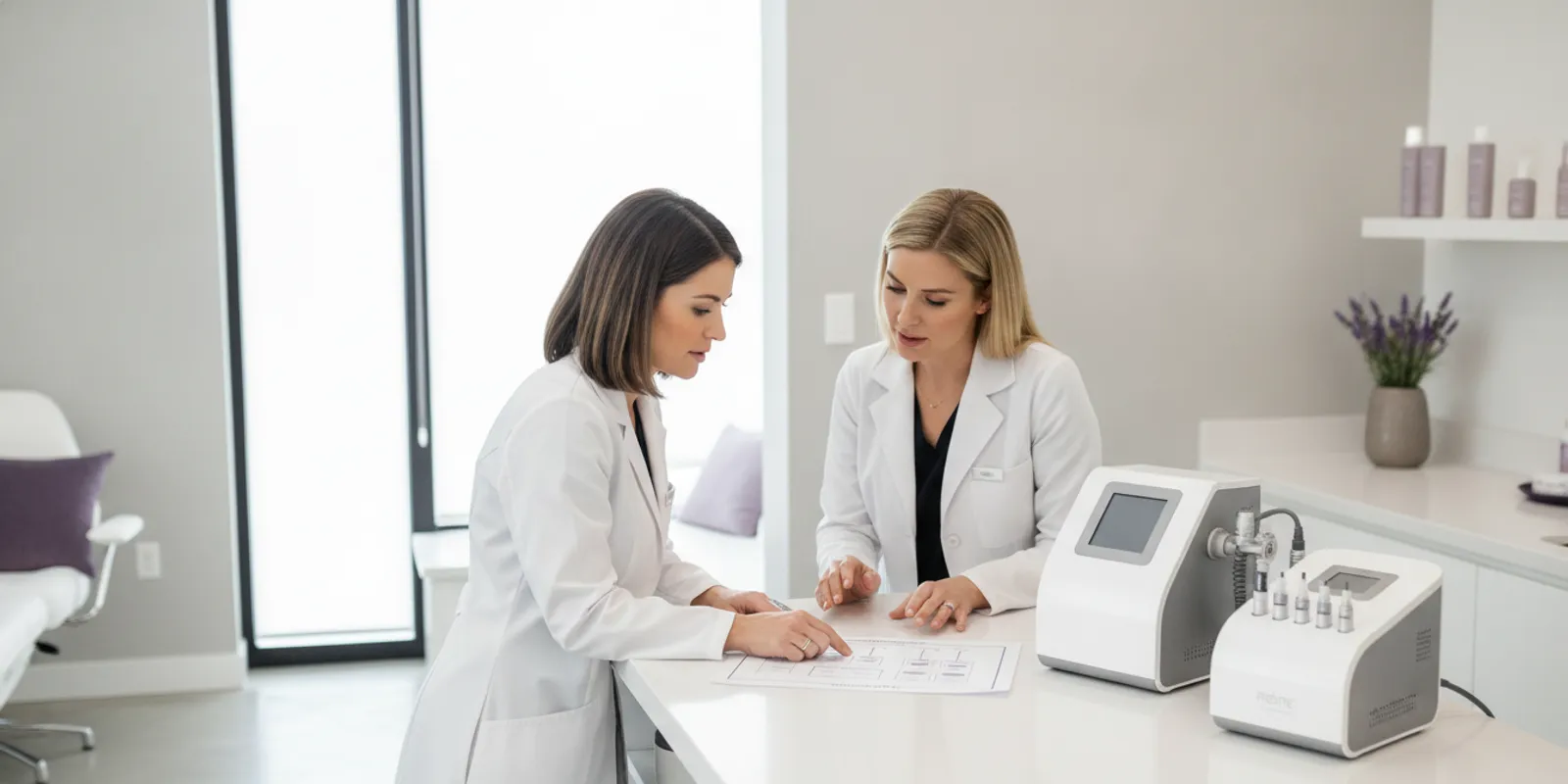
When comparing hydradermabrasion vs microneedling, a practice should start with the difference in modality and the work required to offer each service responsibly. They are not interchangeable treatments: each calls for its own device review, staff preparation, documentation, and operating plan. The better fit depends on your service mix, the team’s qualifications, and the workflow you can support consistently.
Discuss equipment options with our team
What is the practical difference between the modalities?
Hydradermabrasion is a device-based facial workflow that may combine cleansing, exfoliation, extraction, and hydration. The exact steps, solutions, handpieces, and controls depend on the system and its instructions. For example, the U.S. Securities and Exchange Commission filing for Hydrafacial describes its process as a noninvasive hydradermabrasion system used to cleanse, extract, and hydrate skin. That description is useful context for one example in the category, not a substitute for reviewing the intended use and instructions for another device. Read the filing’s description of the Hydrafacial process.
Microneedling uses a device with needles to create controlled microchannels in the skin. The device, configuration, intended use, protocol, and applicable operator requirements matter. Because the modality involves a needle-based procedure, a practice should review screening, preparation, device labeling, training, documentation, and follow-up processes rather than treating it as an extension of a surface facial.
The Préime DermaFacial is an advanced, versatile multi-modality platform that combines hydradermabrasion with LED phototherapy, microcurrent, ultrasound, and oxygen infusion. Those five functions offer a practice several workflow elements to assess in one system; they do not make it equivalent to microneedling or establish that every function suits every client or setting. Practices can review the hydradermabrasion overview for medspa owners and the professional microneedling guide for additional category context.
How do the workflows compare?
Compare the entire appointment, not just the minutes when a device is in use. Map the work from first inquiry to room reset: consultation, eligibility review under your protocols, consent and documentation, room preparation, device setup, service steps, cleaning, and follow-up communication. A demonstration may show the treatment sequence, but your team still needs to account for these surrounding tasks.
| Planning factor | Hydradermabrasion | Microneedling |
|---|---|---|
| Core modality | Device-based cleansing and exfoliation workflow; functions vary by system. | Needle-based device procedure that creates controlled microchannels. |
| Before the service | Review planned functions, device instructions, solutions, and the practice’s consultation process. | Review device labeling, operator qualifications, screening, documentation, and procedure protocols. |
| During the visit | Follow the system-specific handpiece and modality sequence; explain each planned step clearly. | Follow the device-specific procedure and applicable professional protocols; document as required. |
| After the service | Plan cleaning, reusable-part handling, room turnover, and any practice-approved follow-up. | Plan device disposal or cleaning requirements, post-procedure communication, and follow-up processes. |
| Consumables | Confirm solutions, tips, and any required or optional components for the selected system. | Confirm cartridge compatibility, single-use rules, sourcing, and per-service requirements. |
| Staff and oversight | Confirm training and operator requirements for each function and handpiece. | Confirm training, device labeling, scope rules, and any required professional oversight. |
| Practice fit | Assess whether a multi-step facial workflow fits current services and scheduling. | Assess whether the practice can support the procedure, screening, and follow-up needs. |
Use the same planning template for both options so the comparison is fair. For each step, name the owner, estimate the time using your intended protocol, identify any supplies, and note what information is still missing. If the treatment sequence varies by client or chosen functions, document those variations rather than relying on one ideal demonstration. An owner may see a short device demonstration as efficient, while the staff who prepare the room may identify additional setup and turnover tasks. Both perspectives belong in the appointment plan.
What should a practice assess before adding either service?
Define the role in your service menu
Start with the reason for considering a modality. Is the practice filling a gap in its current menu, updating equipment, or adding a service requested by its existing clientele? Write down the intended role in plain language. A device should support a defined practice need rather than being added only because another business offers a similar service.
Then compare the proposed role with current services. Identify possible overlap, the client questions staff will need to answer, and whether the new service requires a separate consultation or preparation process. Do not assume two services are equivalent just because both are described as facials or skin treatments. A plain-language service description should explain the modality and planned steps without promising an outcome.
Map who does each task
List the people involved from inquiry through closeout. The buyer may not be the person operating the device, and the operator may not be responsible for purchasing or compliance review. Assign responsibility for checking device instructions, confirming qualifications, ordering supplies, preparing the room, documenting the visit, maintaining the equipment, and responding to questions. Where a task depends on a clinical lead or other oversight, name that role in the plan.
Use a simple handoff example to find gaps: a client asks about the service, the front desk gives an approved description, a qualified professional conducts the appropriate consultation, an operator prepares the system, and the team records the visit and resets the room. If no one knows who verifies eligibility or confirms a consumable order, the workflow is not ready to launch. Resolve those questions before scheduling the service.
Assess the full visit and room requirements
Sketch the room layout and the sequence of work. Note where the device will sit, how staff access supplies, where used or reusable components go, and how cleaning or turnover fits between appointments. Ask whether the equipment needs a dedicated location, particular utilities, storage, or software access; verify each detail against manufacturer information rather than assuming all systems have the same requirements.
Build a realistic appointment template with preparation, consultation, service, documentation, cleanup, and buffer time. Test that template against your existing schedule. If a service appears to fit only when consultation or room reset is ignored, revisit the schedule instead of compressing those steps. Include a plan for staff absences and equipment downtime so the offering does not depend on a single person or an untested workaround.
How should training and oversight be reviewed?
Training review should be specific to the device and each function the practice plans to use. Ask what initial instruction covers, whether staff can practice the workflow, how competence is assessed, and where operating instructions and support materials will be available afterward. Confirm what happens when staff change or the practice adds a modality that was not part of its original plan.
For the Préime DermaFacial, two handpieces are registered as Class 2. That status is prescriptive and requires some degree of oversight. It does not mean that the entire system is automatically unavailable to a day spa or an esthetician. A practice should confirm the requirements for its exact setting and planned workflow, including whether to operate without those two handpieces or work with a medical director where appropriate. Do not infer permission or prohibition from the platform name alone.
For microneedling, check the specific device’s labeling, intended use, training materials, and the scope-of-practice rules that apply where the practice operates. Requirements may depend on the device, the procedure, the operator’s credentials, and jurisdiction. Keep the verification documented and revisit it if the device, protocol, staff, or location changes. General category descriptions are not a legal determination for a particular practice.
Emage Medical provides information about its aesthetic technology portfolio and its Préime skincare collections. Use product information as a starting point for a guided review, then confirm the system details and applicable requirements for the practice’s intended use.
What should teams compare about consumables and operating needs?
Consumables influence recurring operating costs and service continuity. Request a written list of required and optional supplies for the exact protocols you expect to use. Confirm product names, compatibility, ordering channels, storage, single-use requirements, and whether substitutions are allowed by the manufacturer. Do not assume that equipment in the same category uses identical tips, solutions, or cartridges.
- List every component used per visit, including any supply associated with a selected handpiece or modality.
- Record the unit cost and whether usage changes with the protocol; use current written supplier information.
- Confirm reorder lead times, minimum quantities, availability, and how the practice will track stock.
- Separate disposable items from reusable parts and document the relevant cleaning or maintenance instructions.
- Ask about warranty coverage, service, software, training, and support over the equipment’s expected operating period.
- Model a low, expected, and high service volume using your own assumptions, not an unverified vendor projection.
Emage Medical states that the Préime DermaFacial does not lock customers into proprietary consumables. Confirm which supplies apply to your planned workflow and verify current sourcing details before relying on that point in an operating-cost comparison. For microneedling, ask the device supplier about compatible cartridges, single-use requirements, sourcing, and the cost of supplies for the protocol under consideration.
A useful comparison sheet keeps acquisition cost separate from ongoing expenses. Include consumables, maintenance, service, staff training time, and any operational costs your own practice identifies. Avoid inventing a per-appointment cost when supply quantities or local labor assumptions are unknown. Mark unanswered items as pending and assign someone to obtain a written answer.
How can a practice compare equipment costs responsibly?
Begin with current written pricing for the specific configuration being considered. For the Préime DermaFacial, Emage Medical lists a price of $39,990. Confirm the configuration, what is included, and the current terms directly before making a purchasing decision. Do not infer a monthly payment, lease, rental, or financing arrangement from a list price. For any other device, request current written pricing and terms from its supplier.
Next, compare the purchase with a transparent operating model. Estimate the number of appointments the practice could support based on staffing and its own schedule, then list the assumptions behind that estimate. Include any downtime, training, room turnover, supply use, and maintenance that could affect the workflow. This is a planning exercise, not a promise of revenue or return. Keep projected service volume separate from confirmed costs so decision-makers can see which figures are estimates.
Review the customer registration and purchasing requirements as part of due diligence. Ask the supplier to explain the exact device configuration, documentation, support, warranty, and purchase conditions relevant to your practice. If an answer is verbal, request written confirmation before placing it in the business case.
What questions should you ask during a device review?
Use one checklist for every demonstration or supplier conversation. This keeps a polished presentation from replacing the operational questions your team needs answered.
- What is the intended use? Match the proposed service to device instructions and the manufacturer’s claims. Ask which functions are included in the configuration.
- Who can operate each component? Confirm applicable qualifications, training, and oversight for the particular device, handpiece, and practice setting.
- What happens before and after the device is used? Review preparation, documentation, cleaning, maintenance, and room turnover—not just the central treatment sequence.
- What supplies are required? Get an itemized list, compatibility information, ordering details, and current costs for expected use.
- What support is available? Clarify training, technical support, warranty coverage, service response, software, and how requests are handled.
- What is included in the quoted price? Confirm the configuration, delivery or setup details, taxes or other charges where relevant, and the terms in writing. Do not assume these from a headline price.
- Can the team test its own workflow? Involve the owner, intended operators, clinical lead, and purchasing contact in a demonstration or guided technical review.
- Which questions remain open? Record unknowns, the source needed to resolve them, and the person responsible for follow-up before approval.
For a multi-modality system, ask the demonstrator to show only the functions the practice expects to evaluate, then discuss how each selected function changes setup, training, supplies, and appointment flow. A longer feature list is not automatically a better fit. The relevant question is whether the practice can explain, operate, maintain, and oversee the planned workflow in a consistent way.
How can a team make a fair comparison?
Build a decision sheet with columns for hydradermabrasion and microneedling, plus a source or status column for every answer. Score service fit, staff readiness, workflow complexity, supply access, training, oversight, capital cost, and ongoing operating needs. Use a consistent scale, such as ready, needs verification, or not currently supported. A visible “needs verification” rating is more useful than a confident guess.
For example, a practice may find that its current staff can accommodate a facial workflow but needs further review of a microneedling device’s operator requirements. Another practice may have a trained team but limited room availability for the setup and turnover required by a proposed system. Neither example establishes which modality is clinically preferable; each shows how practice conditions can change the equipment decision.
Hold a short review with the owner, the people who would operate the equipment, the person responsible for oversight, and the purchasing contact. Agree on what evidence would resolve each open question: device labeling, written supplier response, training documentation, a workflow test, or jurisdiction-specific professional guidance. Then record the decision and the conditions needed before launch. For additional planning, explore Emage Medical’s marketing and support information and request a guided product tour.
Frequently asked questions
Are hydradermabrasion and microneedling the same type of treatment?
No. Hydradermabrasion is a device-based cleansing and exfoliation workflow whose steps vary by system. Microneedling uses a needle-based device to create controlled microchannels. The modalities have different equipment and practice workflows.
Which option should a practice choose?
There is no universal answer for every practice. Compare the intended service role, staff qualifications, oversight, workflow, consumables, equipment cost, and ongoing operating needs. Verify device details and applicable requirements before deciding what to offer.
Does a multi-modality facial platform replace microneedling?
No. A platform that combines facial functions is not the same modality as a microneedling device. Compare each on its own intended use and requirements rather than treating a feature count as proof of equivalence.
Does Class 2 registration mean a day spa cannot use the Préime DermaFacial?
Not by itself. Two handpieces are registered as Class 2, and that status is prescriptive and requires some degree of oversight. A practice should verify its exact pathway, including a workflow that does not use those handpieces or appropriate medical-director oversight, rather than assuming every setting is excluded.
What should a practice verify before buying equipment?
Confirm intended use, configuration, operator and oversight requirements, training, supplies, service, warranty, and written purchase terms. Keep assumptions separate from confirmed information in the decision file.
Choose based on the practice you can support
Hydradermabrasion and microneedling call for different equipment, skills, and operating plans. Compare the full visit and the ongoing responsibilities, verify open questions with the right sources, and choose only a workflow your practice can support consistently and within applicable requirements.