
Medspa Consultation Process: A Practice Guide
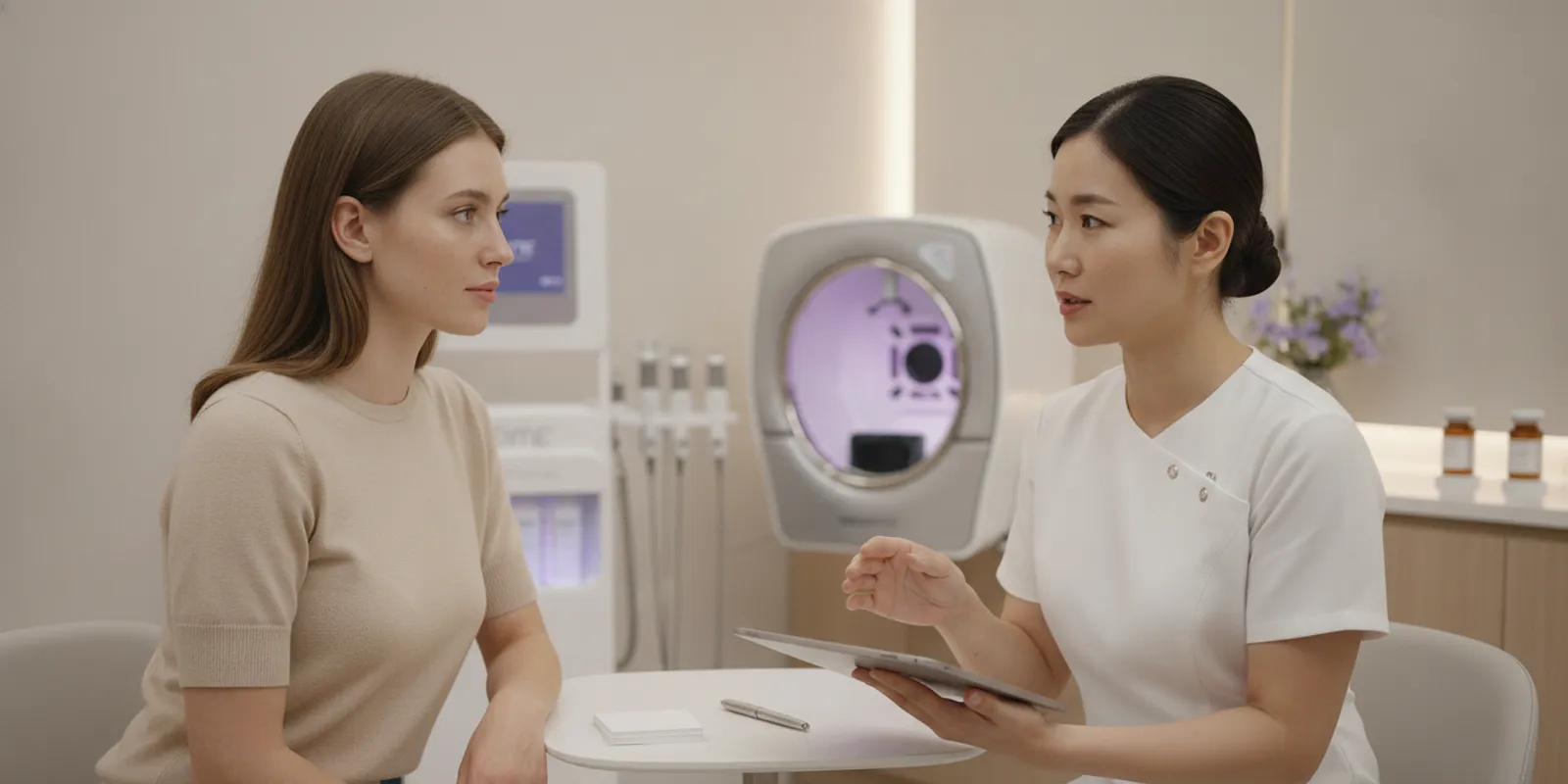
A consistent medspa consultation process gives a practice team a reliable way to understand a client's priorities, review relevant information, explain options, and agree on appropriate next steps. The goal is not to make every visit sound identical. It is to make sure each conversation has a clear structure while leaving room for the client's needs, professional judgment, and the practice's approved protocols.
Call (704) 412-3152 to discuss your practice's device needs
This guide is for medspa and clinical practice teams. It describes a general workflow, not a clinical protocol, legal opinion, consent form, or substitute for device instructions. Practices should adapt each stage to their services, training, state requirements, and clinical leadership.
What Should a Medspa Consultation Process Accomplish?
A well-run consultation connects what a client says they want with information the practice can responsibly review. It creates time to clarify the concern, check that the discussion is within the team's roles, explain what is known, and identify a sensible next step. A recommendation should have a clear connection to the client's stated priorities and the practice's assessment, not simply to a generic service script.
Consistency is about the structure, not a predetermined answer. Two people may arrive with similar concerns but have different circumstances, questions, or preferences. The team can use the same stages and documentation prompts without promising that the same service or plan fits both.
- Listen: Let the client describe the concern and desired change in their own words.
- Clarify: Ask neutral questions to make sure the team understands the request.
- Review: Gather and discuss relevant information using the practice's approved approach.
- Explain: Describe observations, options, and limitations in plain language.
- Plan: Agree on an appropriate next step, which may include further professional review.
- Document: Record the conversation and follow-up responsibilities according to practice policy.
These stages can form a checklist, but they should not become a sales script. The measure of a useful consultation is whether the client understands the discussion and the team has a clear, appropriate plan for what happens next.
How Can Intake Prepare the Conversation?
Intake can help a team use appointment time well, but a form is only a starting point. There is no single intake template that suits every service or jurisdiction. Practice leadership should decide which fields are appropriate, who reviews them, and how information is handled before the team begins using a form.
For a general workflow, the practice may want to capture the client's stated priority, the service or service area they want to discuss, and questions they would like answered. Those are examples of conversation-planning topics, not a clinical history checklist. Do not add screening fields simply because they appear in a generic article; use fields that the responsible professionals have approved for the services offered.
Before the appointment, establish a simple handoff. Decide who looks at the submitted information, where it is available during the consultation, and what the team does if something needs additional review. Avoid treating a form response as a diagnosis or asking nonclinical staff to interpret information beyond their role. When the practice has not defined how to handle a type of response, pause and ask its clinical leadership to establish a process rather than improvising.
It can also help to tell clients what the consultation will cover in neutral terms: listening to their priorities, discussing relevant observations, answering questions, and reviewing possible next steps. Keep that description accurate to the practice's actual workflow. Do not imply that a particular service will be appropriate before the assessment and professional review are complete.
How Should the Team Open the Conversation?
Start with an open invitation instead of a leading question. For example, a team member might ask, "What would you most like us to understand about your goals today?" Then allow the client to finish. Listen for the words they use, and reflect the priority back in a short summary. A neutral reflection can catch misunderstandings before the discussion moves to equipment or services.
Clarifying questions should make the client's request easier to understand, not steer them toward an assumed answer. The staff member can ask what prompted the visit or what questions the client wants addressed, provided those questions fit the role and the practice's approved process. If the conversation raises a matter that requires clinical judgment, identify the appropriate professional to take it forward.
Before moving on, check that the client agrees with the summary. A short confirmation, "Have I understood what you want to focus on?", gives the client an opportunity to correct the record. This step can be especially useful when a client has several priorities. Agree on which one to discuss first rather than trying to resolve every concern at once.
How Can Assessment Make the Discussion More Relevant?
Assessment helps organize the conversation around information relevant to the practice's services. The appropriate method depends on the service, the client's circumstances, the professional's scope, and the practice's approved procedures. Make clear which information comes from the client's description, which comes from an assessment tool, and which conclusions require professional interpretation.
Skin imaging may support a consultation by establishing a visual baseline, documenting current conditions, and helping the team identify topics for discussion. ImagePro Halo, for example, offers capture controls, a three-dimensional presentation of the captured facial view, and a report the client can revisit after the visit. Use the current product materials to confirm which outputs a specific system provides. Those outputs can help structure a conversation. They should not be presented on their own as a diagnosis or proof of a future result.
Practices comparing imaging options can review the ImagePro skin imaging systems and the ImagePro Halo capture and report capabilities. Whichever tool a practice uses, explain what it is intended to show and where its limits are. A visual report is one part of a consultation, not a replacement for an appropriately qualified professional's assessment.
A useful way to discuss findings is to separate observation from interpretation. An observation might be that an image displays a particular pattern or area for review. Interpretation is what a qualified professional concludes after considering the observation alongside other relevant information. Pause when the image is unclear or the client asks for a conclusion the team cannot support. If the matter falls outside a staff member's role, say so and follow the practice's review pathway.
What Should the Team Explain Before Discussing a Plan?
Education should help the client understand the information gathered and the choices available for discussion. Use ordinary language, avoid certainty where none is warranted, and explain the limits of any tool used. Do not turn a visual score, report, or device output into a promise about a treatment response.
A plain-language explanation can follow a consistent sequence:
- Restate the client's priority and confirm that it is still the main focus.
- Describe relevant observations, including how the information was collected.
- Explain what the observations can help the team discuss, and what they cannot establish by themselves.
- Present only options that the appropriate professional considers suitable for discussion.
- Invite questions, check understanding, and explain what remains to be reviewed.
For device-based services, staff should use current device instructions, applicable training, and relevant scope-of-practice requirements. Some devices, particularly RF microneedling systems, may require licensed medical professional supervision depending on state rules. A general article cannot determine what supervision a particular practice needs. Teams should confirm the applicable requirements with qualified advisors and the relevant state authorities. The professional microneedling device overview can inform a product discussion, but it is not a substitute for regulatory review.
For federal medical-device information, consult the U.S. Food and Drug Administration's official website and review the materials relevant to the specific product and use. Practices should also rely on product-specific instructions and qualified regulatory or clinical guidance when questions arise. Do not assume that one device's status or instructions apply to another.
How Should a Practice Compare Consultation Elements?
The table below is a planning aid for teams building a workflow. It compares the contribution of each element and a practical point to settle before using it. It is not a treatment protocol, required sequence, or replacement for the practice's own policies.
| Element | What it contributes | What the practice should define |
|---|---|---|
| Client conversation. | Clarifies priorities and questions in the client's own words. | How staff will listen, summarize, and avoid leading the discussion. |
| Intake information. | Gives the team context before or during the visit. | Which fields are approved, who reviews them, and how concerns are handed off. |
| Practice-approved assessment. | Organizes relevant observations for professional review. | Which method fits the service, who may interpret it, and its limitations. |
| Skin imaging. | Can establish a visual baseline and support comparison over time. | How images are explained, documented, and kept within their intended role. |
| Plan discussion. | Connects the client's priorities and reviewed information with possible next steps. | Who may discuss each option and how unresolved questions are addressed. |
| Documentation and follow-up. | Supports continuity and records what was discussed. | Which records are required, who owns next steps, and what policy applies. |
Use the comparison to identify gaps in the workflow. Check three handoffs before relying on the process. Who reviews an intake response? Who explains an image? Who contacts the client about an unresolved question? Define those responsibilities first. Do not fill gaps with assumptions about legal requirements or clinical criteria.
How Should the Team Discuss a Personalized Plan?
Planning should follow the conversation and assessment rather than precede them. A team member can summarize the client's stated goal, the relevant information reviewed, and the options the responsible professional has determined are appropriate to discuss. Then explain practical next steps clearly. Depending on the discussion, a next step could be additional review, time for the client to consider information, or a discussion of a suitable service. The process does not require an immediate decision.
A simple example shows how the pieces fit together. Suppose a client says that uneven-looking tone is their main concern and asks what the practice can offer. The team first confirms that this is the priority, reviews information using its approved approach, and describes what the available observations show without treating an image as a diagnosis. The appropriate professional can then explain which options merit discussion, what questions still need answers, and whether further review is appropriate. The client can ask questions and decide what to do next without being told that a particular result is assured.
If the client's request does not match what the assessment supports, explain the difference respectfully. For example, a client may ask about a specific device or service before the practice has determined whether it is appropriate to discuss. The team can acknowledge the request, explain that it needs professional review, and return with a clear answer or an agreed next step. Avoid presenting an equipment preference as a recommendation just because the client mentioned it.
Where a practice is considering imaging as part of the consultation, compare systems on three points. Look at the information the team needs, how that information will be used, and how the client-facing discussion will work. A product overview such as the Emage Medical technology portfolio can help a professional team identify topics for evaluation. The selection of equipment should follow the practice's own needs and applicable requirements, not a claim that one tool can answer every clinical question.
What Belongs in Consultation Documentation?
A useful record reflects what happened without adding conclusions that were not established. Practices should define documentation templates, access, and retention with appropriate clinical and legal guidance. Requirements may depend on the service and jurisdiction, so a generic checklist should not be treated as a complete record standard.
As a workflow-design exercise, teams can consider whether their approved records have a place for the client's expressed priorities, information reviewed, options discussed, questions raised, and agreed next steps. If imaging or a report was used, the record can identify its role in the conversation in a way that follows practice policy. These are planning prompts, not a required universal template.
Use clear, neutral wording. Keep a distinction between what the client reported, what the team observed, and any conclusion made by the responsible professional. If a question remains open, document the handoff or next action as the practice's policy requires rather than recording an unsupported answer. Follow approved procedures for consent, treatment documentation, and client records.
Informed consent, patient assessment, and treatment documentation are important regulatory considerations in medical aesthetics. The details depend on the service and applicable rules. Use the practice's approved materials and consult qualified advisors when requirements are unclear. This guide does not provide consent language or establish documentation obligations.
How Can Imaging and Follow-Up Support Continuity?
When imaging is part of the practice's process, a baseline can make later comparisons easier to organize. Image comparison tools can support progress documentation, including through automatic alignment, but the images remain records of what was captured. They do not guarantee a particular outcome or explain every change on their own.
Before using comparison images in a follow-up conversation, establish a consistent approach under practice policy. Consider who will review the images, how the client will be told what a comparison can and cannot show, and where the results will be documented. Keep the timing and method appropriate to the service and the practice's clinical direction; this guide does not prescribe a follow-up interval.
At a return discussion, invite the client to describe their experience and questions before interpreting the comparison. Explain visible differences cautiously and in context. If image conditions differ or the result is difficult to interpret, say that plainly. The purpose is to support an informed conversation and continuity, not to manufacture a conclusion from a visual comparison.
How Can Teams Keep the Process Consistent?
Consistency grows from a shared sequence, clear handoffs, and practice-specific training. A checklist can remind the team to listen, explain, plan, and document. It should not dictate clinical decisions or replace a service-specific protocol. Train staff to recognize when a question is outside their role and how to bring it to the appropriate professional.
Training can cover both communication and the tools used in the room. Staff should understand how to operate equipment according to applicable instructions, explain its role in the consultation, and avoid claims beyond the available information. Emage Medical offers product training and support for the equipment a practice chooses. The published support page asks practices to confirm which training is available for a device, how it is delivered, and what is included with a purchase or warranty. Practices can review Emage Medical's marketing and support information and ask what applies to their team. Do not assume that consultation training is included with every device purchase.
For example, during a team practice session, one person can play a client asking what an imaging report "means." Another person explains what the tool displays and where professional interpretation is needed. The team can then discuss whether the explanation was plain, whether it stayed within the speaker's role, and whether the next handoff was clear. This is a communication exercise, not a method for setting clinical conclusions.
New team members also need to know where to find current device instructions, approved client materials, and escalation contacts. Practices can use company and purchase information to frame a product evaluation; Emage's customer registration and purchasing requirements describe information collected for professional buyers. Keep that registration process distinct from a client's consultation or intake process.
How Can a Practice Review and Improve the Workflow?
Review the workflow when staff notice repeated confusion, missing handoffs, or uncertainty about how to explain an assessment tool. Use examples in a manner consistent with privacy and practice policy. The purpose is to improve clarity and completeness, not to pressure staff to secure a particular purchase or treatment decision.
Useful discussion prompts include:
- Can each team member describe the purpose and limits of the information they present?
- Does the opening conversation identify the client's priority before the team proposes options?
- Can staff explain who reviews information that needs professional attention?
- Do clients have time to ask questions and understand the next step?
- Are observations, interpretations, and client-reported information kept distinct in discussion and records?
- Does the follow-up handoff have a clear owner under the practice's procedures?
If the team finds a problem, revise the part of the workflow causing it. A confusing intake handoff may call for a clearer review responsibility. Repeated questions about a report may call for better staff education about its limits. If the uncertainty concerns a clinical or legal requirement, refer it to qualified leadership or an advisor rather than trying to solve it with a generic script.
Call (704) 412-3152 to discuss your practice's device needs or contact Emage Medical.
Frequently Asked Questions
Should every consultation follow the same script?
No. A shared sequence can help the team cover important stages, but the questions, discussion, and next steps should reflect the individual client and the practice's approved procedures. Use a structure, not a fixed recommendation.
Can skin imaging decide which service a client needs?
Imaging can provide visual information and support a discussion. It should be interpreted within the practice's broader assessment process and should not be presented by itself as a diagnosis or guarantee.
What should staff do when a question is outside their role?
They should avoid guessing, explain that the question needs further review, and follow the practice's established process for involving an appropriately qualified professional.
Does this guide replace consent materials or clinical protocols?
No. Practices should use approved consent materials, device instructions, clinical procedures, and applicable requirements. Seek qualified guidance when a requirement is uncertain.
A clear medspa consultation process gives the team a dependable structure. Use it for listening, reviewing information, explaining options, and documenting next steps. Keep each conversation specific to the client and the practice.